

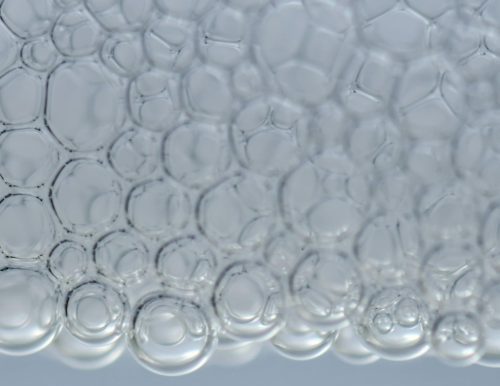
Imagine being told that the solution to recovering valuable metals from ore is to make them float on water. In the late 1800s, this counterintuitive idea seemed absurd to most mining engineers. Heavy mineral particles floating like bubbles? Impossible.
Yet this “startling innovation” would become one of the most important technological achievements of the 20th century. Today, froth flotation processes billions of tons of ore annually and is responsible for producing most of the world’s copper, lead, zinc, and other essential metals. Without it, the modern world—with its electrical grids, electronics, and industrial infrastructure—simply wouldn’t exist.
This is the story of how desperation, innovation, and scientific curiosity transformed an impossible idea into an indispensable technology.
A Crisis Looming (1860-1900)
The Industrial Revolution was hungry for metals. Between 1850 and 1900, global copper production exploded from 55,000 to 525,000 tons annually—nearly a tenfold increase. Lead and zinc production followed similar trajectories. But this unprecedented growth was built on increasingly shaky ground.
The problem was simple yet devastating: traditional gravity separation methods worked beautifully for coarse particles but failed miserably with fine ones. As miners depleted rich surface deposits of coarse-grained ore and pushed deeper underground, they encountered increasingly fine-grained ores that refused to separate efficiently. Enormous quantities of valuable metals were simply washing away into tailings dumps.
When Prosperity Turned to Crisis
No place illustrates this crisis more dramatically than Broken Hill, Australia. When the Broken Hill Proprietary Company (BHP) opened its doors in 1886, it was a license to print money. Miners extracted rich surface ore containing coarse-grained silver and lead minerals, and profits soared. In 1890, the company distributed $1,000,000 in dividends and bonuses.
But prosperity proved fleeting. By 1896, the easy pickings were exhausted. Miners now had to extract fine-grained primary sulfides that defied conventional concentration methods. The financial carnage was swift and brutal: by 1902, dividends and bonuses had collapsed to just $110,000. Employment fell 30%. The once-thriving mining town faced an existential question: find a new process or abandon the mines entirely.
Meanwhile, massive tailings dumps told a story of staggering waste. By 1904, Broken Hill’s dumps contained more than 7 million tons of material assaying about 4% lead, 140 g/ton silver, and 15% zinc—a fortune in metals slowly oxidizing in the Australian sun.
The crisis at Broken Hill was a microcosm of challenges facing the entire mining industry. In the western United States, porphyry copper deposits promised enormous reserves, but gravity concentration methods were leaving 35-40% of copper in tailings. Something had to change.
The Forgotten Pioneers (1877-1900)
While Broken Hill’s mines struggled toward crisis, scattered inventors across the globe were experimenting with a radical concept: using surface chemistry differences to separate minerals. Most of their work would be forgotten or go unrecognized for decades. But the seeds of revolution were being planted.
The Bessel Brothers: Success Without Recognition
In 1877, Adolph and his brother, who owned a crucible factory in Dresden, Germany, faced a quality control problem. The graphite they used in their crucibles was impure. Rather than accept inferior products, they invented a solution.
Their process was elegant in its simplicity: mix graphite ore with a small amount of oil, add water, and boil the mixture. The graphite floated to the surface where it could be skimmed off. From ore containing 40% graphite, they achieved concentrate containing more than 90% graphite. In 1878, Adolf Bessel received the Wohler Gold Medal for this invention.
The Bessel patents of 1877 and 1886 contained all the essential features of modern froth flotation, including the deliberate use of gas bubbles to accelerate separation. Yet when superior Ceylon graphite entered the market, their operation closed, and their groundbreaking work was forgotten. The mining world would have to rediscover flotation from scratch.
Carrie Everson: Vision Without Resources
The story of Carrie Everson reads like a parable about innovation stifled by circumstance. Born in Massachusetts in 1842, she studied medicine before marrying Dr. W. Everson in 1864. When her husband’s mining investments failed, Everson did something unusual for a woman of her era: she studied mineralogy to understand why.
Around 1878, she began experimenting with ways to concentrate sulfide minerals. In 1885, she patented a process for separating sulfides from gangue by mixing powdered ore with a small amount of oil in acid solution and floating the sulfides in a scum. The myth is that her patent originated from observations made while washing geologists’ sample bags. The reality is more impressive: Everson was a skilled scientist who conducted systematic laboratory experiments and tested results in practice.
Her process worked in small plants but not on a larger scale—perhaps because the ores were unsuitable, or perhaps because sulfide flotation’s secrets weren’t easily scaled. Without financial resources to continue research, Everson returned to teaching. Later assessments would recognize her prescience: “as a metallurgist she was a quarter of a century in advance of her profession.”
Building Toward Critical Mass
By 1898, Francis Elmore had patented a process for concentrating sulfides by adding oil to pulverized ore in water, agglomerating the sulfides and buoying them to the surface. He proved its value at the Glasdir mine in Wales, and in 1900, his work was discussed at an Institution of Mining and Metallurgy meeting in London. This represented a crucial milestone: flotation-type processes were gaining recognition in serious technical circles.
In 1901, Alcide Froment in Italy patented the deliberate use of gas bubbles to float sulfide particles. The pieces were falling into place. Engineers at Broken Hill, facing economic catastrophe, would soon have reason to pay attention to these obscure patents and experiments.
The Broken Hill Crucible (1901-1915)
Few problems concentrate the mind like impending financial ruin. At Broken Hill, the urgency was palpable. Those 7 million tons of tailings represented both the industry’s failure and its potential salvation. A process to extract zinc would revive the mines and restore prosperity. The race was on.
An Explosion of Experimentation
What followed was a remarkable period of parallel innovation. Multiple teams pursued different approaches simultaneously, creating a competitive yet collaborative environment where ideas spread quickly and failures informed successes.
Guillaume Delprat, BHP’s general manager, and Charles Potter, a Melbourne brewer, independently developed processes using carbon dioxide generated by adding acid to hot pulps. Potter’s process had a short life, but the BHP version operated from 1902 to 1923, producing about 90,000 tons of zinc concentrate annually from 300,000 tons of tailings.
Auguste de Bavay’s film flotation process worked differently: deslimed, acidified, and oiled pulp flowed down a corrugated cone dipped into water at an angle. Hydrophobic sulfides floated on the water surface while wetted particles sank. Operating from 1905 to 1917, it produced 80,000 tons of zinc concentrate annually at its peak.
Francis Elmore’s vacuum flotation process, which precipitated dissolved air by applying a vacuum to the pulp, ran for six years and produced 80,000 tons of concentrate annually from 250,000 tons of tailings.
The Minerals Separation Breakthrough
The Minerals Separation Company arrived at Broken Hill in 1904 to test Arthur Cattermole’s process, in which oil caused sulfides to agglomerate and sink while other minerals were washed away. The test failed spectacularly—the sulfide granules broke apart on concentrating tables, requiring further treatment that made the process uneconomical.
But failure bred innovation. During subsequent tests, someone discovered that using even smaller amounts of oil, combined with violent agitation to entrain air, caused sulfides to be carried into a froth that could be removed in a spitzkasten. This observation led to the development of stirred flotation cells used in series—a configuration recognizable to any modern flotation engineer.
This marked a watershed moment: the transition from relying on chemically generated gas bubbles to using mechanically entrained air, the principle that would dominate flotation technology for the next century.
From Bulk to Selective Separation
By 1908, bulk flotation of zinc concentrates was working well enough that about 11 million tons of material had been processed, producing 3 million tons of zinc concentrate. But the industry needed more than bulk concentration—it needed to separate lead and zinc minerals into individual concentrates that smelters could process.
The breakthrough came from three parallel approaches:
E.J. Horwood of BHP discovered that roasting bulk concentrate to 400°-500°C “deadened” galena by oxidizing its surface to lead sulfate, while blende remained unaltered and could be refloated.
F.J. Lyster at the Zinc Corporation observed that galena and blende had different natural flotation rates. He developed a process using gentle flotation of an alkaline pulp with eucalyptus oil as frother. Critically, Lyster recognized the importance of air control and devised a cell where air was added to pulp, passed through a pump, and then entered a tank where froth separated. Differential flotation was achieved by controlling air flow rate.
But the most transformative discovery came from Leslie Bradford at BHP in 1913. He found that copper sulfate activated sulfide minerals while sulfur dioxide depressed blende during galena flotation. These chemical discoveries—particularly selective activation and depression of minerals—changed flotation from an inflexible bulk process into a versatile separation technique capable of producing individual mineral concentrates.
By 1916, the urgent problem of finding a new concentration process for Broken Hill ore had been solved. Prosperity was assured, and the turbulence of testing new ideas gradually settled into routine operation. But across the Pacific, an even bigger challenge awaited.
The American Copper Revolution (1911-1920)
While Broken Hill engineers were perfecting differential flotation, American mining companies were eyeing flotation with cautious interest. The stakes were enormous: the United States was in the midst of an electrification boom that demanded copper in unprecedented quantities. But porphyry copper deposits, despite their huge reserves, presented a vexing problem: gravity concentration was leaving 35-40% of copper in tailings.
Basin: The American Proving Ground
On August 1, 1911, James M. Hyde installed America’s first froth flotation plant at the Basin Reduction Company in Basin, Montana. Hyde had no previous experience with froth flotation, yet he clearly understood something fundamental about the process: concentrate quality matters. He introduced the concept of using rougher and cleaner cells in closed circuit, with cleaner tailings returning to the rougher—a configuration that remains standard practice today.
The Black Rock ore was ideal for early experiments—low in pyrite, with moderate amounts of lead, zinc, and copper. Within a year, Basin had built mills processing 200 and then 1,200 tons per day. Success at Basin proved flotation worked at industrial scale. But the real prize was the low-grade copper ores that covered vast stretches of the western United States.
Dr. Ricketts’ Million-Dollar Gamble
The Inspiration Company owned part of a huge copper deposit in Arizona, but conventional gravity methods gave poor results. William B. Thompson’s engineers had planned a mill, but when the property was purchased by Anaconda Company, consulting engineer Dr. Louis Ricketts scrapped those plans entirely.
What happened next was either visionary leadership or reckless gambling, depending on one’s perspective. Ricketts discarded $1 million worth of mill construction and spent another million dollars—plus a full year—experimenting. Stockholders were horrified. But Ricketts had a vision: build the first mill that used the new flotation process on raw ore rather than just on gravity tailings.
His experimental program was methodical and comprehensive. In late 1912, laboratory tests at Minerals Separation Company’s facility achieved 87% copper recovery in a 15% concentrate from 2% ore. In early 1913, he built a 50-tons-per-day test mill. In early 1914, a 600-tons-per-day mill verified the results at larger scale. Each step reduced uncertainty.
In 1915, Dr. Ricketts built a 15,000-tons-per-day mill that recovered 80% of copper. The gamble had paid off spectacularly. The Inspiration Company caught the high copper price of 1915 with “the most successful mill that had ever been built.”
Two innovations in the Inspiration mill would have lasting impact. First, ball mill–classifier circuits ground ore directly to flotation feed size, controlling particle size and minimizing production of coarse composite particles. Second, the mill used pneumatic Callow cells that introduced air under pressure, providing better control over bubble size than subaeration cells.
Rapid Industry Transformation
The success was immediate and dramatic. By 1914, forty-two mining companies were operating or experimenting with flotation. By 1915, most principal copper and lead mines had adopted the process. By 1918, flotation was concentrating 25 million short tons of copper ore annually in the United States alone.
This represented more than technological change—it was an economic revolution. Low-grade deposits that had been uneconomical suddenly became profitable. Mining operations expanded rapidly. The copper that powered America’s electrical grid and industrial expansion was, in large part, recovered by flotation.
The Chemistry Revolution: Enter Xanthates
Early flotation processes relied heavily on empirical knowledge and operator skill. The chemistry was poorly understood, and results varied unpredictably. Operators added “oils” of uncertain composition and adjusted conditions by observation and instinct. Flotation worked, but it was as much art as science.
Everything changed in 1923 when Cornelius Keller and Carle Lewis of Minerals Separation Company patented the use of xanthates as collectors for sulfides. How they discovered xanthates’ remarkable properties remains unknown—perhaps because sodium ethyl xanthate was already used in rubber manufacturing and as a herbicide, or perhaps someone simply tested a convenient chemical from the laboratory shelf.
The impact was transformative. Xanthates increased flotation rates of sulfides considerably, dissolved readily in water, and could be added in controllable amounts. By 1925, xanthate-lime-pine oil circuits were standard, and flotation had evolved from an unpredictable process requiring constant operator intervention into a stable, reliable technology that could be operated systematically.
This transition from art to science paralleled broader changes in industrial practice. The era of skilled craftsmen making intuitive adjustments was giving way to engineered processes with measured inputs and predictable outputs.
Global Expansion: Canada and Europe
Cominco’s Complex Ore Challenge
When Ralph Diamond joined Consolidated Mining and Smelting Company (Cominco) in June 1917, he brought experience from Anaconda and Inspiration. He would need it. The Sullivan mine presented two unprecedented challenges: remarkably fine association between valuable minerals and gangue iron sulfide, and a much higher ratio of iron sulfide to lead and zinc minerals than in any previously studied ore.
The Sullivan deposit was so complex that Minerals Separation Company, despite extensive experience, considered it too difficult and set samples aside to focus on simpler ores. But Diamond persisted. By the end of 1918, he had demonstrated a successful three-stage differential flotation process on a 600-tons-per-day test mill. The 1918 annual report noted that “important improvements in metallurgical practice have added many years to the life of that property and have made it one of the most valuable mineral deposits in America if not in the whole world.”
Coal Flotation in Europe
Laboratory studies of coal flotation began in the United States in 1915 and proved highly effective. But American coal mining—characterized by thick seams and careful handling—generated relatively few fines. The high cost of dewatering coal concentrate was also a deterrent. There was little economic incentive to adopt flotation.
Europe told a different story. Thin seams, underground mining, and mechanization generated high proportions of fines. In 1920, the first coal flotation plants were erected in Spain and France, followed by Britain in 1922, and Germany and Belgium in 1923. By 1925, flotation was cleaning about 1 million tons of coal annually. By 1927, thirty-six plants used Minerals Separation cells—twelve in Germany alone.
Coal flotation grew more slowly than sulfide flotation because it addressed only a small fraction of mined coal, and its product was low in value. Yet it grew steadily, and by 1933, about sixty coal flotation plants operated in Europe with one in the United States.
Years of Consolidation (1925-1960)
By 1925, efficient subaeration cells were available, and chemical reagents enabled selective mineral separation. Just in time—the next twenty-five years would test the industry’s resilience. Economic depression in the 1930s and World War II in the 1940s dominated this era, yet demand for flotation-produced minerals continued growing.
Progress was cautious and incremental. Plant capacities increased, but through multiplication of small proven units rather than development of large untested ones. The Morenci concentrator built in 1942 exemplifies this conservative approach: 432 cells, each with just 2.2 m³ volume, to float 45,000 tons per day of ore. It worked, but it occupied enormous floor space and required extensive piping and control systems.
One positive legacy of flotation’s success was renewed interest in fundamental research. Senior engineers who had witnessed flotation’s immense economic impact established research units at universities in the 1920s. Groups led by A.F. Taggart at Columbia University, A.M. Gaudin at MIT, and I.W. Wark at the University of Melbourne made fundamental contributions to understanding flotation chemistry and physics. Their work would eventually enable the innovations of the modern era.
The Modern Revolution (1960-2000)
From 1950 onward, mineral production by flotation accelerated rapidly. World copper mine production grew from 2.3 million tons in 1950 to 11.0 million tons in 2000. Zinc production grew from 2.0 million to 8.9 million tons over the same period. To meet this demand, the industry needed technological advances in three critical areas: flotation machines, process control, and circuit optimization.
Mechanical Cells: Bigger is Better
Mechanically agitated flotation cells haven’t changed fundamentally in their principle of operation since 1912—rotating mechanisms keep solids in suspension and create bubbles by shearing air. But their maximum size has increased dramatically to reduce capital costs and floor space requirements.
For Outokumpu cells, maximum volume grew from 16 m³ in 1970 to 300 m³ by 2004—nearly a twentyfold increase in just thirty-four years. This represents remarkable engineering achievement: maintaining effective mixing and bubble dispersion while scaling up to such enormous volumes required solving complex fluid dynamics problems.
Column Flotation: Simplicity Rediscovered
Perhaps the most significant innovation in flotation machine design was also, in some ways, the simplest: the flotation column. The concept had been around since 1907, when Norris patented a tall vessel for pneumatic flotation. Towne and Flinn’s 1919 patent depicted countercurrent flow with slurry descending against rising bubbles, making prescient observations about bubble-particle interaction and entrainment.
But these early columns suffered from sanding of coarse particles, plugging of diffusers, and channeling in scaled-up versions. Commercial success didn’t come until the 1960s, and the key innovation was deceptively simple: wash water.
Boutin and Tremblay in Canada filed their patent in 1963, incorporating wash water addition just below the froth-pulp interface. The innovation actually germinated from trials using columns for a solvent-in-pulp process, where entrainment of slurry in rising droplet wakes was solved by adding clear aqueous phase below the interface. The inventors quickly realized flotation offered more potential.
But invention and commercialization are different challenges. Column Flotation of Canada Ltd., founded to develop the Boutin-Tremblay invention, faced a seventeen-year journey from patent to first industrial installation at Les Mines Gaspé in 1981. This long gestation period is typical in the minerals industry, where risk aversion and proven technology dominate decision-making.
After 1981, however, adoption accelerated. The key was the “positive bias” strategy: adding sufficient wash water to generate net downward water flow across the froth-pulp interface, controlled by maintaining tails flow higher than feed flow. This countered entrainment and improved concentrate grade. Roger Amelunxen, attending a column seminar at McGill University, grasped this concept and within days was successfully operating a homemade column at Gibraltar Mines.
By the early 1990s, three additional companies were marketing columns. Today, an estimated 3,000 columns operate worldwide across industries from minerals to offshore oil production. The flotation capacity in the oil industry may actually exceed that in the minerals industry.
High-Intensity Cells: Speed and Efficiency
The 1960s also saw development of high-intensity flotation cells using very small bubbles produced by forced or induced air. These machines recognize that most particle-bubble interactions are time-independent—recovery depends mainly on the characteristics of an intensely mixed contacting zone.
The first was the Davcra cell, devised by Bill Davis at the Zinc Corporation in Broken Hill and tested in 1966. Air and feed slurry were injected through a dispersion nozzle, with energy dissipated via collision with a vertical baffle. The cell worked for some years in plants processing sulfide minerals and coal.
In China, Professor Daiwei Wu developed jet flotation cells starting in 1967, with first industrial use that same year. The XPM machine uses jets of pulp and air instead of rotating mechanisms to create “aeration-agitation” zones. These cells now operate in fourteen Chinese coal-preparation plants, with the largest being 23 m³.
Germany’s Technical University of Clausthal, led by Professor Bahr, developed the Bahr cell where compressed air flows through small openings into the pulp via aerator units beneath the main flotation tank. This spawned multiple variations including Ekoflot, Pneuflot, Allflot, and Imhoflot.
The Jameson cell, developed by Graeme Jameson at the University of Newcastle, Australia, features a downcomer where feed pulp creates a high-pressure jet that shears and entrains naturally aspirated air. Collection occurs in just 1-10 seconds. Since 1986, 225 Jameson cells have been installed in coal, metalliferous, and industrial mineral applications.
The Microcel, developed at Virginia Polytechnic Institute in 1992, uses a static in-line mixer as the high-intensity bubble-contacting zone, with separation occurring in the column. More than 100 installations worldwide demonstrate its commercial success.
These high-intensity cells achieve flotation rate constants 2-4 times greater than mechanical cells and substantially higher than columns. For circuits where floor space is limited or fast kinetics are essential, they offer compelling advantages.
The Control Revolution: On-Stream Analysis
Perhaps no single development transformed flotation more profoundly than on-stream analysis (OSA) systems. Before OSA, flotation was an art dependent on operator skill—observing froth characteristics, testing samples with panning dishes, and manually adjusting air and reagents. The delay between sampling and receiving assay results meant data was historically interesting but operationally useless.
The problem was stark: rapid analysis of elements like lead and copper in circuit streams wasn’t possible using conventional wet chemistry methods. Better control required analyzing particles directly in pulps rather than sampling, drying, and processing. In the 1950s, X-ray techniques emerged as the most promising approach.
X-ray Tube Systems: Proven Technology, Complex Implementation
The first on-line system using X-ray tube and crystal spectrometer was tested during 1959-1960 at Anaconda Copper’s 36,000-tons-per-day concentrator in Butte, Montana. The X-ray system worked well, but mechanical problems plagued implementation. As one engineer noted: “Sufficient wood is present to completely stop all flow through the X-ray head. Various types of screens were tried before finding a satisfactory solution. This was typical of the type of mechanical problem that plagued and delayed the final process control by X-ray analysis.”
The system eventually presented assays of thirteen streams every twenty minutes—a dramatic improvement over previous practice, but the complexity of accurate sampling, long pipeline runs, pumping, sample splitting, constant head tanks, and flow cells made it an expensive proposition.
The Finnish Success Story
In 1962, the Outokumpu Group in Finland started what became the most successful X-ray tube analyzer program. The company established an Institute of Physics and brought the Pyhasalmi multimetal mine into operation the same year. The mine became a large-scale laboratory where instruments developed by the institute were tested—a crucial factor in program success.
The institute developed a fourteen-stream wavelength dispersive X-ray analyzer installed at Pyhasalmi in 1968. Its success led to a second analyzer in 1970. Assays of each stream were available every 6-7 minutes with over 99% availability. Using these analyzers, Outokumpu developed its own process control system, installing the first at the Kotalahti nickel concentrator in 1973.
Continuous improvement led to current models that can be installed directly in the process area rather than in separate rooms. By 2004, more than 400 Outokumpu X-ray tube analyzers had been sold for use in mineral concentrators worldwide—a testament to reliable engineering and persistent refinement.
Radioisotope Systems: Simpler, More Flexible
Radioisotope systems promised simpler and less expensive OSA compared to X-ray tube systems. Short sample lines would reduce pipe blockage and window wear. The plant system could be built up in stages as needs arose.
The critical link between the mineral industry and radioisotope expertise was established in 1962 when North Broken Hill Ltd. approached the Australian Atomic Energy Commission (AAEC). This led to development of dual-energy gamma-ray transmission techniques suitable for high atomic number elements like lead. The first permanent radioisotope OSA installation in a mineral concentrator was at North Broken Hill in 1968.
For medium atomic number elements like copper and zinc, radioisotope X-ray fluorescence techniques were developed during 1966-1968. Extensive testing on samples from multiple concentrators gave promising results, followed by successful on-stream trials during 1968-1971.
The Game-Changing Immersion Probe
In 1967, Douglas Hinckfuss of CRA proposed replacing measurements on sample by-lines with probes directly immersed in plant process streams. The immersion probe—a casing containing the radioisotope source and detector assembly—was a key development that eliminated sample by-lines and dramatically reduced window wear.
This created a complete contrast with X-ray tube systems. Joint CRA-AAEC trials using immersion probes at Broken Hill demonstrated excellent results for lead and zinc. By 1974, better control of grinding and flotation at New Broken Hill Consolidated was achieved using radioisotope probes and computer control.
Philips Industries Ltd. was selected to manufacture the commercial system, with Australian Mineral Development Laboratories (Amdel) handling feasibility studies, installation, and calibration. The first three plant systems were installed in 1973. By 2003, about 170 radioisotope X-ray systems had been sold worldwide for mineral processing operations.
The Dawn of Automatic Control
By 1975, the long delay between sampling and assaying had been eliminated. Flotation circuit performance could be assessed every few minutes, and automatic control systems could be developed that responded to changes in mineral content and floatability.
Early control approaches included controlling reagents by feed grade and/or concentrate grade, automatic raising and lowering of concentrate diverter trays, and searching for optimum performance by making incremental changes. These systems typically improved performance by reducing variations in concentrate grades and increasing recoveries.
The challenge remained defining the control target when ore changed significantly. Determining the new grade-recovery curve and best operating point on-line proved difficult. Various mathematical techniques have provided some progress, and commercial software for flotation circuit control is now available, but this remains an active area of development.
Beyond Mining: Flotation’s Hidden Ubiquity
Over the decades, flotation has found applications far removed from mine sites. The same principles that separate valuable minerals from gangue work equally well for removing solids in wineries, breweries, butter and cheese factories, dairies, and sewerage plants.
Flotation removes oil and contaminants from water in smelters and refineries, eliminates algae and organic contaminants from drinking water, de-inks recycled paper, treats abattoir and sawmill effluent, and plays roles in sugar refining, wool scouring, vegetable oil production, paint manufacturing, and paper processing.
The process has even found use in the offshore oil industry, where flotation capacity may actually exceed that in the minerals industry—a remarkable footnote to a technology invented to recover lead and zinc from Australian tailings dumps.
The Extraordinary Legacy
From Carrie Everson’s experiments in 1885 to today’s sophisticated automated plants, froth flotation has undergone remarkable evolution. What began as a “startling innovation” that skeptics dismissed has become the backbone of modern mineral processing—and much more.
The numbers tell a compelling story:
- In 1913, ten years after serious development began, Broken Hill had floated 11 million tons of material
- By 1918, American plants were floating 25 million short tons of copper ore annually
- Today, flotation processes over 2 billion tons of ore annually worldwide
The economic impact is almost incalculable. Flotation saved Broken Hill from collapse, enabled mining of low-grade porphyry copper deposits, and continues supplying metals essential for modern technology—from smartphones to electric vehicles, from electrical grids to renewable energy systems.
But perhaps the most important legacy is what flotation demonstrates about innovation itself. When gravity separation failed and mines faced closure, a handful of determined engineers and scientists refused to accept defeat. They experimented, failed, persisted, adapted, and eventually succeeded.
They succeeded not through a single brilliant invention but through countless small improvements, shared knowledge, competitive collaboration, and willingness to test ideas at scale. From Bessel’s forgotten graphite process to Everson’s under-resourced experiments, from Broken Hill’s parallel approaches to Dr. Ricketts’ million-dollar gamble, from xanthates’ chemistry revolution to OSA’s control breakthrough—each advance built on previous work.
This is how transformative technology actually emerges: not from isolated genius but from persistent collective effort focused on solving real problems. The modern world, built on metals recovered by flotation, stands as testament to what that persistence can achieve.
Learn More About Mineral Processing and Flotation Technology
Industry Organizations and Technical Societies
- Society for Mining, Metallurgy & Exploration (SME) – Leading professional society for mining and minerals professionals
- Australasian Institute of Mining and Metallurgy (AusIMM) – Professional organization supporting minerals industry in Australia and Asia-Pacific
- Canadian Mineral Processors (CMP) – Technical society focused on mineral processing
- International Mineral Processing Congress (IMPC) – Premier international conference on mineral processing
Academic Programs and Research Centers
- MIT Mineral Processing Research Laboratory – Historic center of flotation research
- University of British Columbia Mineral Processing – Leading North American mineral processing program
- University of Queensland Sustainable Minerals Institute – Australian mineral processing research center
- Luleå University of Technology Mineral Processing – European center for mineral processing research
Equipment Manufacturers and Technology Providers
- Metso Outotec – Major flotation equipment manufacturer
- FLSmidth – Flotation cells and process solutions
- Weir Minerals – ESCO and Cavex flotation products
- TAKRAF – Flotation technology and systems
Technical Resources and Publications
- OneMine.org – Digital library of mining and minerals documents
- Minerals Engineering Journal – Leading journal for mineral processing research
- SME Mineral Processing Handbook – Comprehensive reference for mineral processing technology
- International Journal of Mineral Processing – Research publication covering flotation advances
Government and Educational Resources
- U.S. Geological Survey Minerals Information – Data and statistics on mineral production
- Natural Resources Canada – Mining – Canadian mineral processing information
- Australian Minerals Council – Information on Australian mining and processing