admin

Figure 17-1: Greens Creek Mill Flowsheet

Greens Creek Polymetallic Mine — 2019 Technical Report

This NI 43-101 Technical Report details the operational status and life-of-mine plan for the Greens Creek Polymetallic Mine in Alaska, operated by Hecla Mining. The mine has been operational for 30 years, with continuous operation for the last 23 years. It is an underground mine targeting massive sulfide mineralization in a temperate rainforest environment. The current mine life extends to 2030, with infrastructure primarily located at the 920/860 mine area and the Hawk Inlet camp.

Greens Creek Polymetallic Mine — 2019 Technical Report Read Post »
Bolañitos Mill Runs Near 1,100 t/d in Campaigns, Recovering 89.5% of Gold and 84.4% of Silver by Flotation

The 2021 production data for the Bolañitos plant indicates a throughput of 418,514 tonnes of ore, grading 42 g/t silver and 2.02 g/t gold. Recoveries averaged 87% for silver and 90.7% for gold, resulting in 483,507 oz of silver and 24,730 oz of gold recovered. The plant operated at an average throughput of 1,163 tonnes per operating day, slightly exceeding the planned rate of 1,100 t/d, with only 4 days of maintenance downtime recorded.

Bolañitos Mill Runs Near 1,100 t/d in Campaigns, Recovering 89.5% of Gold and 84.4% of Silver by Flotation Read Post »

Red Mountain Gold Project — Preliminary Economic Assessment Report

The Red Mountain Gold Project Preliminary Economic Assessment Report outlines the proposed recovery methods for extracting gold and silver from mine feed. The process involves stage crushing using a jaw and cone crusher, followed by grinding in a rod and ball mill circuit to a target grind size of 95% passing 38 µm. The crushed feed is processed at a nominal rate of 1000 t/d.

Red Mountain Gold Project — Preliminary Economic Assessment Report Read Post »

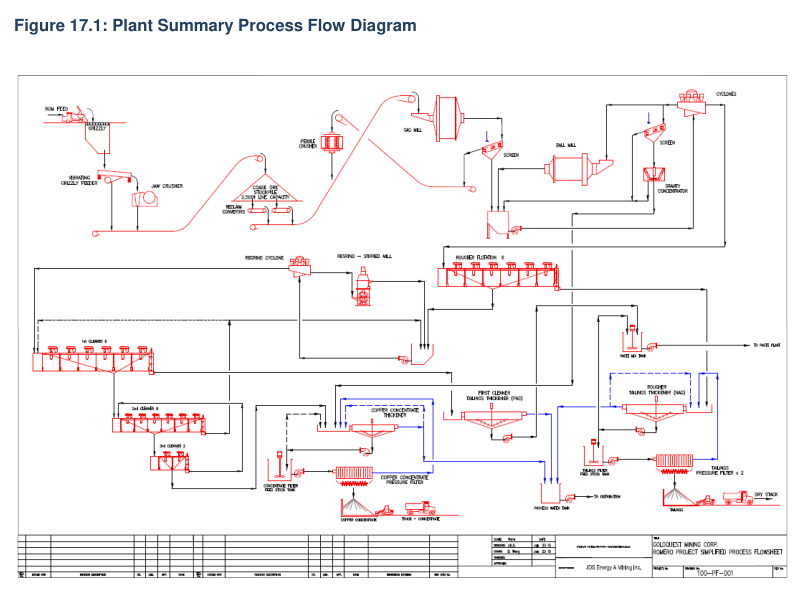
Figure 17.1: Plant Summary Process Flow Diagram

Romero Project — Preliminary Economic Assessment Technical Report

This report outlines the conceptual flowsheet for the Romero Project Preliminary Economic Assessment (PEA). The process is designed to treat 1,400,000 tonnes per year of ore, with a daily throughput of 4,000 tonnes. The metallurgical strategy focuses on recovering copper into a concentrate containing approximately 20% copper, along with gold and silver credits.

Romero Project — Preliminary Economic Assessment Technical Report Read Post »

Figure 17-2. Heap Leach Process Block Flow Diagram

Sheep Mountain Preliminary Feasibility Study — 2021

The Sheep Mountain Project is a uranium recovery facility utilizing conventional heap leaching technology, a process established globally for oxidized ores. The operation involves stacking mined material on a double-lined heap leach pad, applying an acidic leaching solution containing sulfuric acid and an oxidant, and collecting the pregnant leach solution (PLS) for processing. Over a 12-year mine life, the project is designed to recover an average of 1.4 million pounds of U3O8 annually.

Sheep Mountain Preliminary Feasibility Study — 2021 Read Post »

Figure 1-2: Simplified Process Flow Diagram

Volta Grande Project — 2015 Technical Report

This NI 43-101 Technical Report outlines the Feasibility Study for the Volta Grande Project, conducted by Belo Sun Mining Corp. in May 2015. The study details a processing plant design based on metallurgical test work and industry best practices, targeting gold recovery from non-refractory ores containing free grains within quartz and diorites. The process route involves gravity concentration followed by cyanidation of gravity tailings, utilizing a hybrid carbon-in-leach/carbon-in-pulp (CIL/CIP) configuration to balance capital costs and adsorption efficiency.

Volta Grande Project — 2015 Technical Report Read Post »

Figure 17-1: General Process Flow Diagram

Kami Project — 2024 Pre-feasibility Study Technical Report

This NI 43-101 Technical Report presents the Pre-feasibility Study for the Kamistiatusset (Kami) Iron Ore Property in Labrador. Champion Iron Limited has reviewed the scope of the project to design a process allowing the production of a low silica grade concentrate suitable for Direct Reduction usage. The flowsheet is based on metallurgical testwork and engineering experience, incorporating major changes from the 2018 Feasibility Study to improve iron recovery and concentrate grade.

Kami Project — 2024 Pre-feasibility Study Technical Report Read Post »

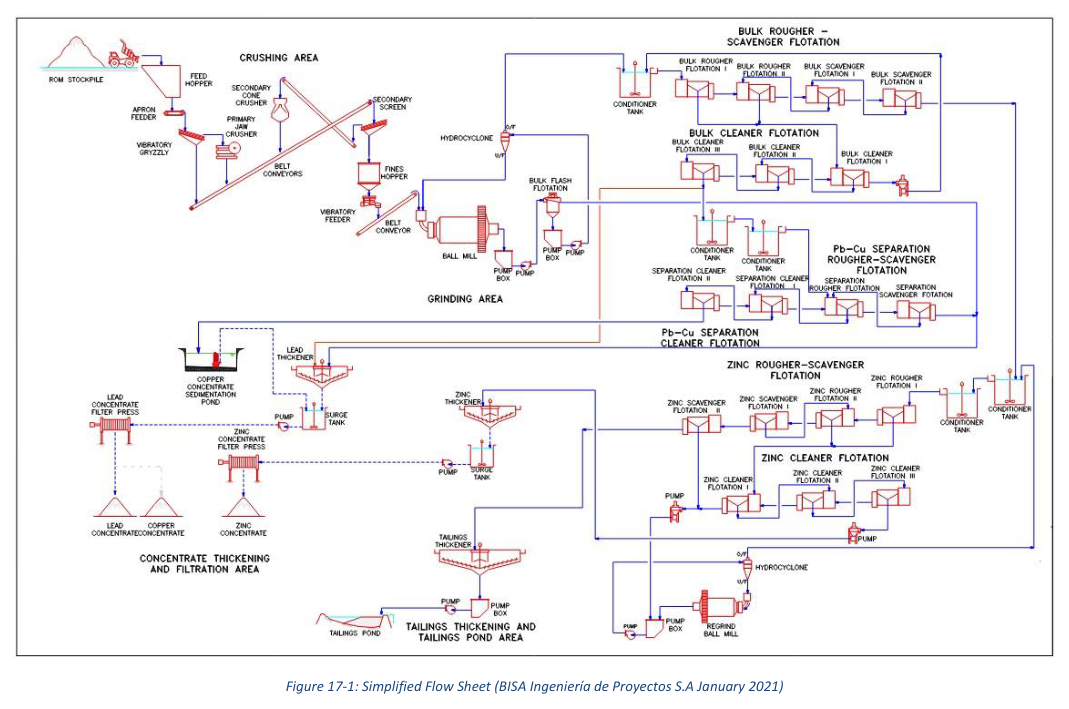
Figure 17-1: Simplified Flow Sheet (BISA Ingeniería de Proyectos S.A January 2021)

Bethania Silver Project — 2022 Technical Report

The Bethania Silver Project, formerly known as Mina Santa Elena, is a polymetallic deposit located in central Peru. Historical toll processing between 2013 and 2016 confirmed the high value silver-rich content of the mineral source, with silver reporting primarily to Pb-concentrates and remaining silver to Zn-concentrates. The principal minerals are galena and sphalerite, with silver potentially associated with sulfosalts like proustite and pyrargyrite. While past production records indicate saleable Pb and Zn concentrate grades, no metallurgical testwork has been completed to confirm the production of saleable Cu concentrates.

Bethania Silver Project — 2022 Technical Report Read Post »

Preliminary Economic Assessment on the Woodstock Manganese Property

This Preliminary Economic Assessment (PEA) outlines the proposed hydrometallurgical processing methods for the Plymouth deposit at the Woodstock Manganese Property. The report indicates that hydrometallurgical technologies are more amendable to processing the fine-grained manganese carbonate deposits found at the site compared to high-temperature pyrometallurgical methods. The selected process focuses on producing highly purified manganese sulphate solution for the primary production of Electrolytic Manganese Metal (EMM), with opportunities for co-production of other manganese chemicals.

Preliminary Economic Assessment on the Woodstock Manganese Property Read Post »

Scroll to Top