Mineral Processing Circuit

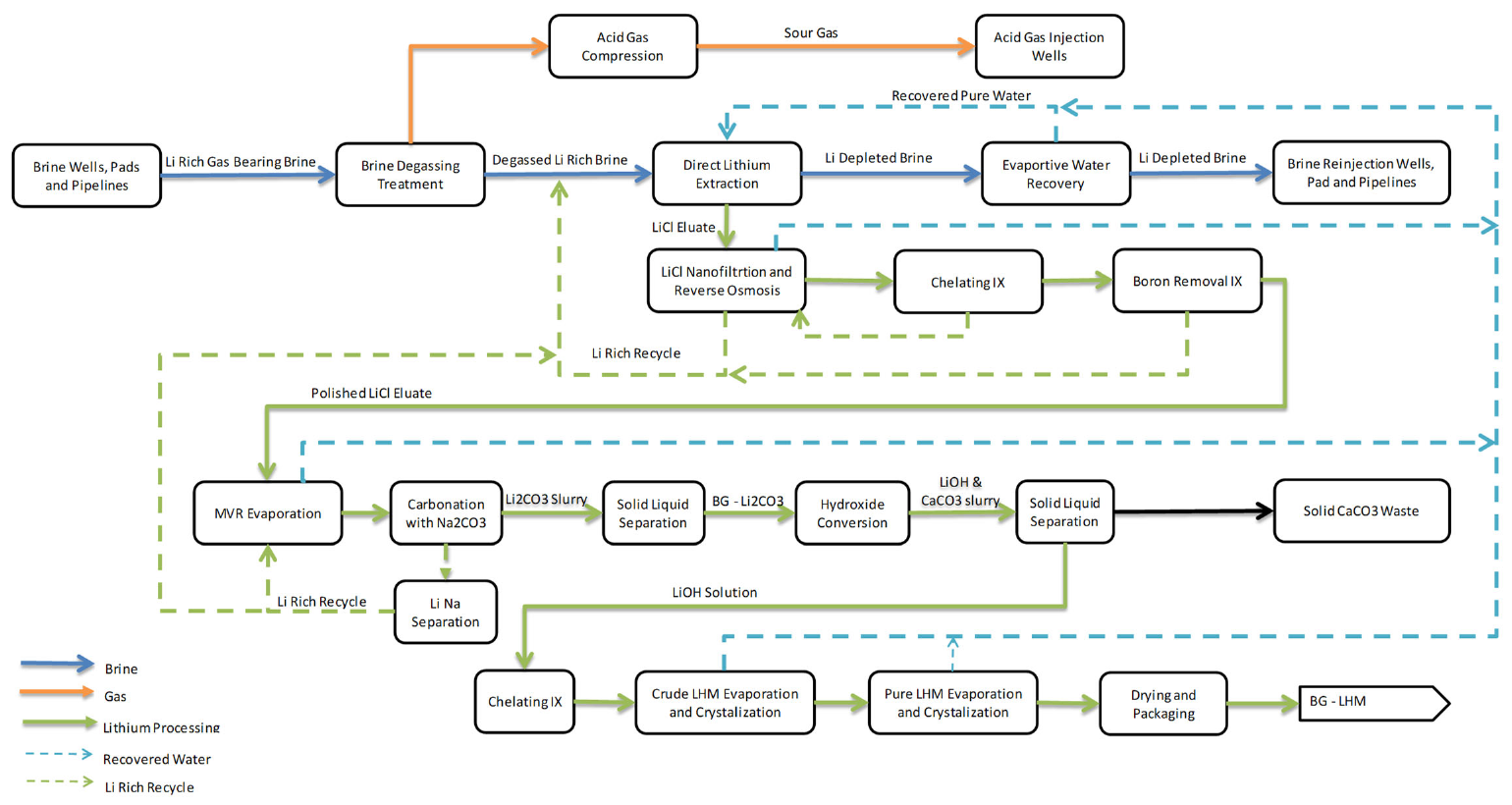
Clearwater Project process flowsheet: Central Processing Facility Block Flow Diagram

Clearwater Project — 2024 NI 43-101 Technical Report

The Clearwater Project is a Pre-Feasibility Study for a lithium hydroxide monohydrate production facility located in the Bashaw District of Central Alberta, Canada. The project utilizes Direct Lithium Extraction (DLE) technology to process Leduc Formation brines, targeting a production rate of 32,250 tonnes per annum with a planned mine life of 50 years. The process involves extracting lithium-enriched brine through producer wells, treating it to remove acid gases, and recovering lithium via an aluminate-based sorbent system.

Clearwater Project — 2024 NI 43-101 Technical Report Read Post »
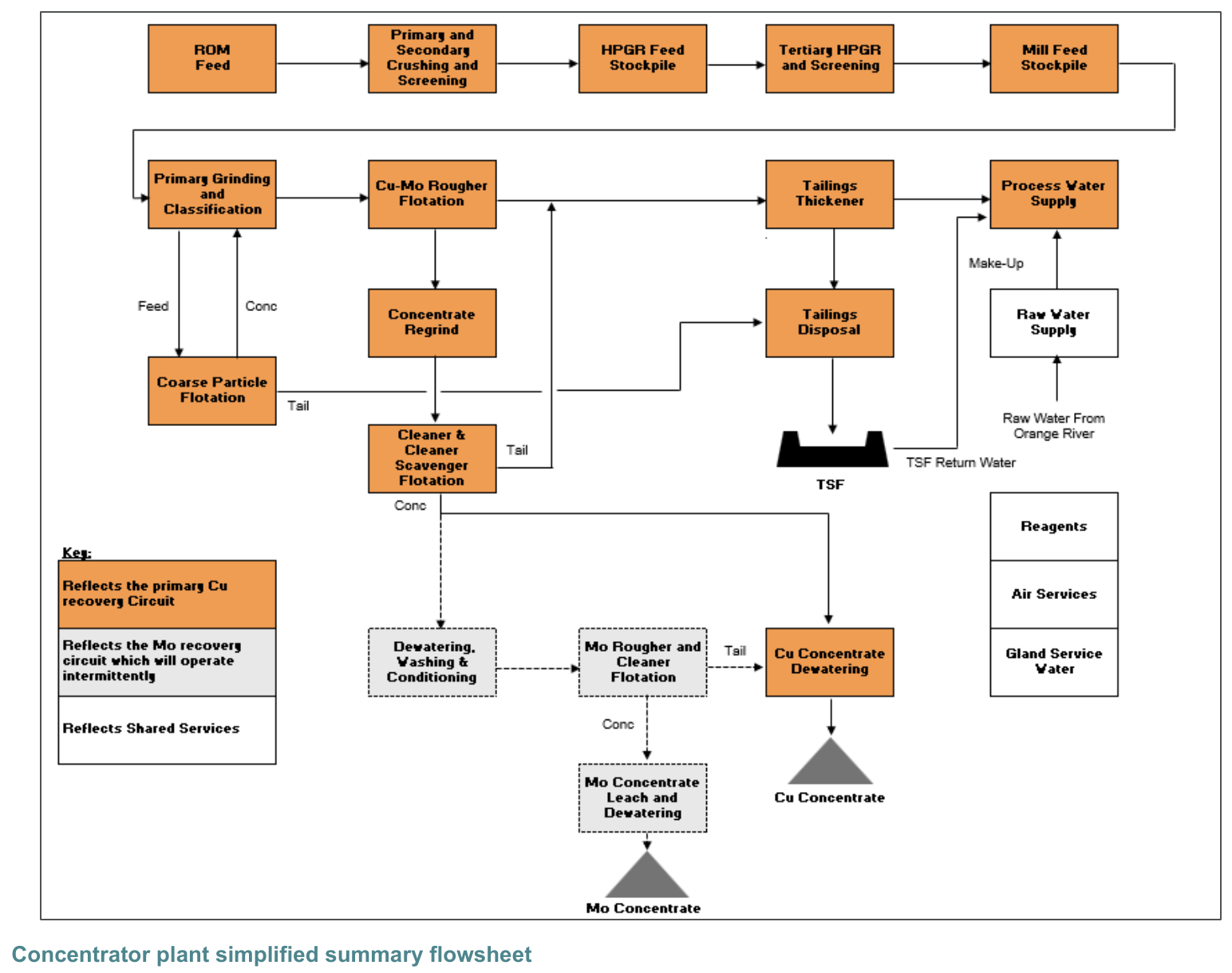
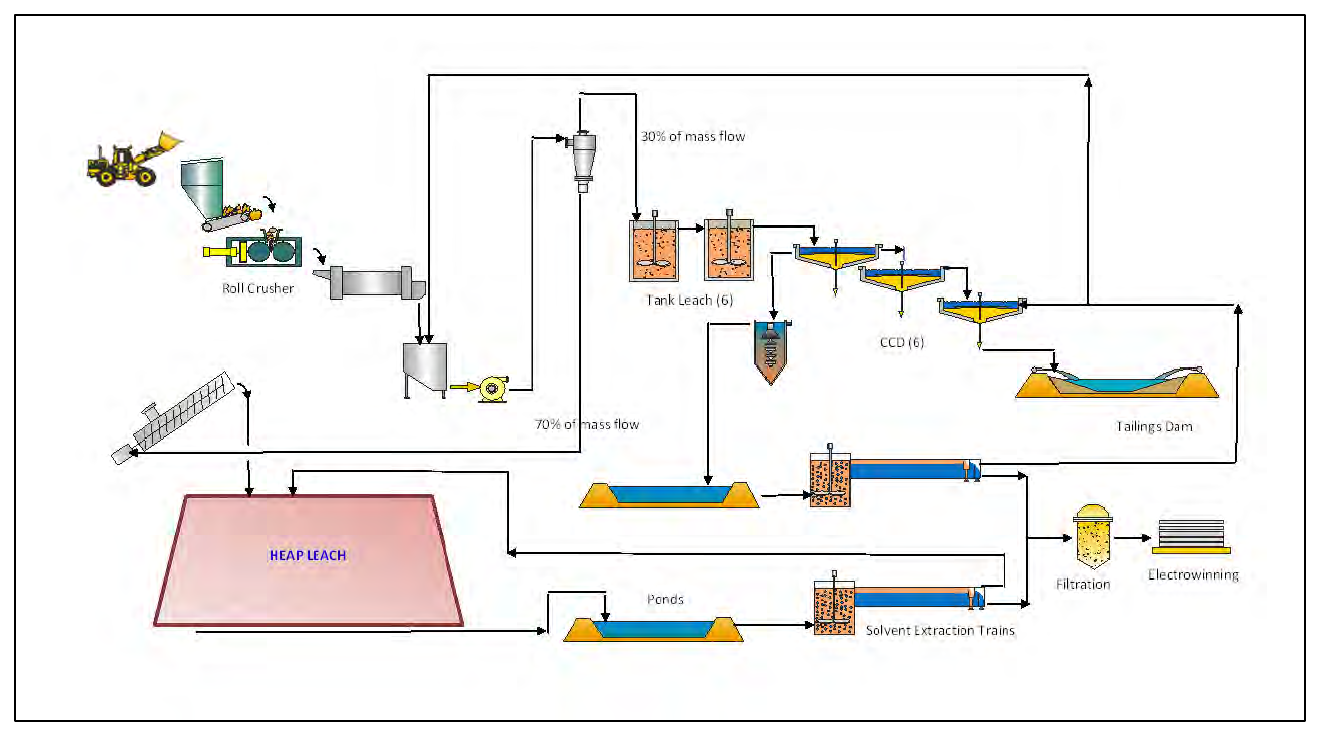
Haib Copper Project process flowsheet: Concentrator plant simplified summary flowsheet

Haib 2025 PEA Pairs a 28 Mtpa HPGR-Ball Concentrator With HydroFloat Coarse Gangue Rejection and a 7 Mtpa Bacterial Heap Leach

This Preliminary Economic Assessment (PEA) Update for the Haib deposit in Namibia evaluates the feasibility of a whole ore heap leaching operation for copper recovery. The project targets a low-grade, acid-insoluble sulfide orebody (0.31% Cu) where conventional crushing, grinding, and flotation were deemed economically unfeasible due to ore hardness and energy requirements. Heap leaching, specifically bacterial-assisted leaching, was selected to improve project viability by reducing costs associated with grinding.

Haib 2025 PEA Pairs a 28 Mtpa HPGR-Ball Concentrator With HydroFloat Coarse Gangue Rejection and a 7 Mtpa Bacterial Heap Leach Read Post »

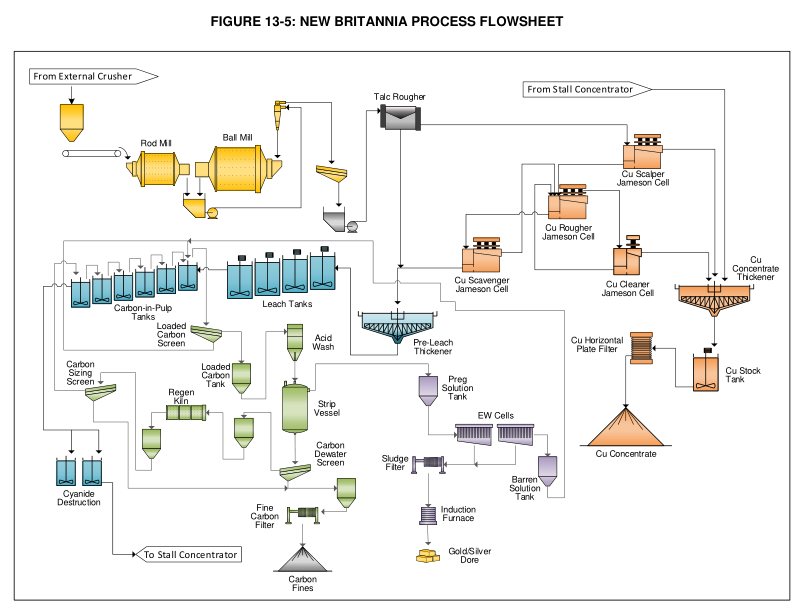
FIGURE 13-5: NEW BRITANNIA PROCESS FLOWSHEET

Snow Lake Project — Recovery Methods (Section 17)

The report details the proposed recovery methods for the Snow Lake Project, focusing on the reprocessing of a Gold Residue Stockpile (GRS). The development includes three main components: the GRS, a Process Facility, and a Storage Impoundment Area. The process involves excavating residue, repulping, polishing regrinding to 75µm, and bacterial oxidation (bioleaching) in six reactors. The oxidized residue is filtered and shipped off-site, while the liquor is neutralized with limestone to precipitate ferric arsenate for disposal.

Snow Lake Project — Recovery Methods (Section 17) Read Post »

Kipawa Project process flowsheet: Figure 17.1 –Block Diagram of the Kipawa Process Flowsheet

Kipawa Feasibility Study Concentrates Rare Earth Ore by Magnetic Separation, Then Leaches and Purifies It Into Heavy and Light REE Products

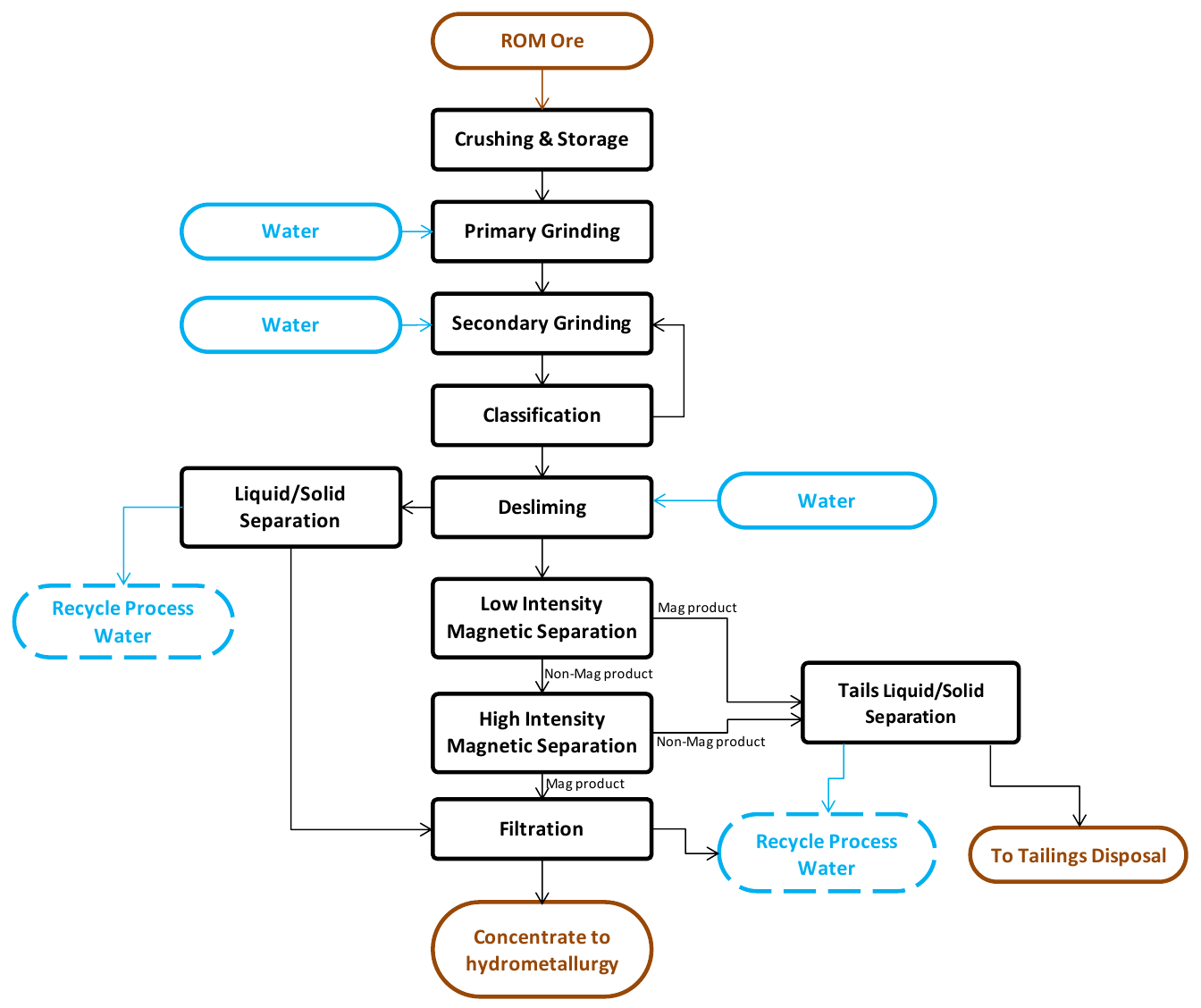
The Preliminary Economic Assessment (PEA) for the Kipawa Project, prepared by Matamec Explorations Inc. in March 2012, outlines a two-site processing strategy for Rare Earth Oxides (TREO). The mine site operations involve crushing, grinding, and magnetic separation to produce a concentrate, which is then shipped to a hydrometallurgical facility near Temiscaming for further processing. The design criteria specify an annual feed of 1,500,000 tonnes of ore at 0.5% TREO, targeting a total TREO recovery of 81% and an annual production of 6,000 tonnes of TREO.

Kipawa Feasibility Study Concentrates Rare Earth Ore by Magnetic Separation, Then Leaches and Purifies It Into Heavy and Light REE Products Read Post »

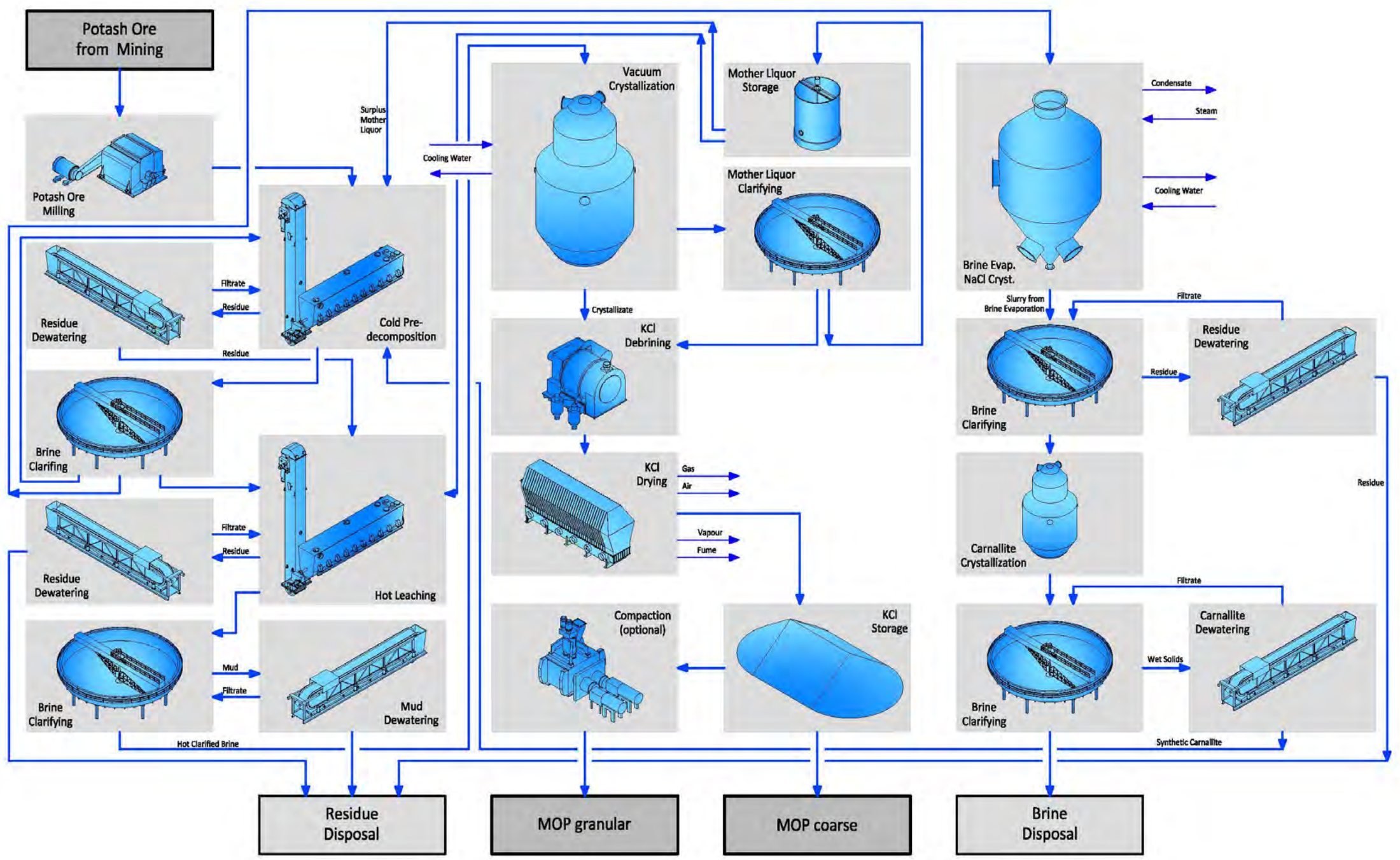
Sylvinite/Carnallitite Mining in the Holbrook Basin, Arizona process flowsheet: Simplified Process Flow Diagram – Hot Leaching Process

Sylvinite/Carnallitite Mining in the Holbrook Basin, Arizona — 2013 PEA Update

This 2013 Preliminary Economic Assessment (PEA) update by ERCOSPLAN outlines the technical feasibility for the Holbrook Basin project in Arizona, focusing on the extraction and processing of Sylvinite and Carnallitite ore. The project targets the production of Muriate of Potash (MOP) with scenarios ranging from 1.0 to 2.5 million tonnes per annum (MTPA). The proposed mining method is conventional underground mining, where solid ore is hoisted to the surface for processing.

Sylvinite/Carnallitite Mining in the Holbrook Basin, Arizona — 2013 PEA Update Read Post »

Kipoi Copper Project process flowsheet: Stage 2 PEA Kipoi Copper Project Processing Flowsheet

Kipoi Copper Project — NI 43-101 Technical Report

This technical report details the recovery methods for the Kipoi Copper Project, specifically focusing on Stage 1 processing which has been previously reported in CSA NI43-101 Technical Reports from October 2008 and May 2009. Stage 1 involves the development of the Kipoi Central open cut mine and a processing facility designed to treat 900,000 tonnes per annum of high-grade oxide and transition ores containing over 3.25% Copper. The facility utilizes crushing, ore washing, gravity spirals, and heavy media separation to produce approximately 117,800 tonnes of copper concentrate over a period of just over three years.

Kipoi Copper Project — NI 43-101 Technical Report Read Post »
Tonopah Property — 2020 Preliminary Economic Assessment

This report outlines the Preliminary Economic Assessment (PEA) for the Tonopah Property, conducted by Viva Gold Corp. The technical report details a conceptual process flowsheet based on 2019 McClelland Laboratories test work. The proposed operation involves a three-stage crushing circuit to a nominal 80% passing 10 mesh product, followed by agglomeration and transport to a leach pad for heap leaching.

Tonopah Property — 2020 Preliminary Economic Assessment Read Post »

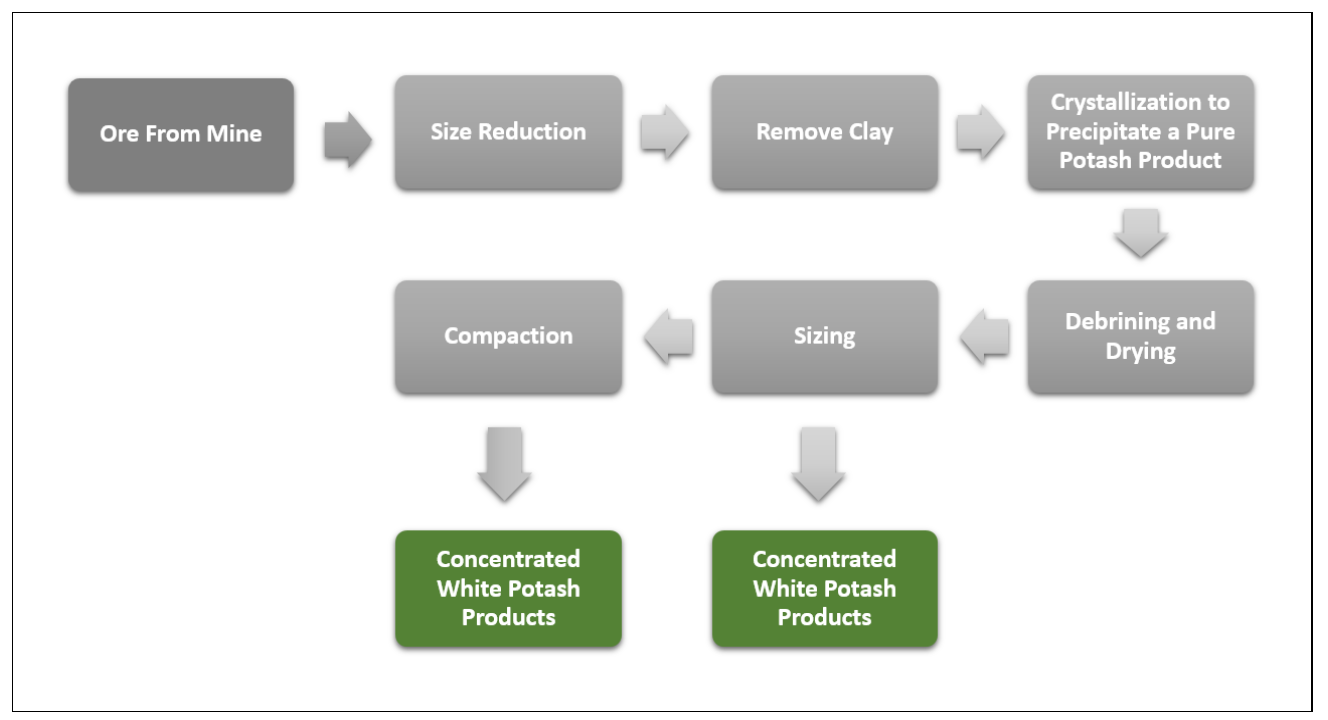
Cory process flowsheet: Simplified flow diagram for potash crystallization milling at Cory

Cory Potash Mill Near Saskatoon Relies Heavily on Crystallization, Averaging 77.8% Recovery

The Cory mine has been producing potash since 1968, currently operated by Nutrien. The facility focuses on concentrated white potash products (near-pure KCl) including granular, chicklets, and prills. Production data from 2015 to 2017 indicates annual output ranging from 0.988 to 1.508 million tonnes with an average K2O grade of approximately 61.5%. Mill recovery rates have averaged 72.0% over the past decade.

Cory Potash Mill Near Saskatoon Relies Heavily on Crystallization, Averaging 77.8% Recovery Read Post »

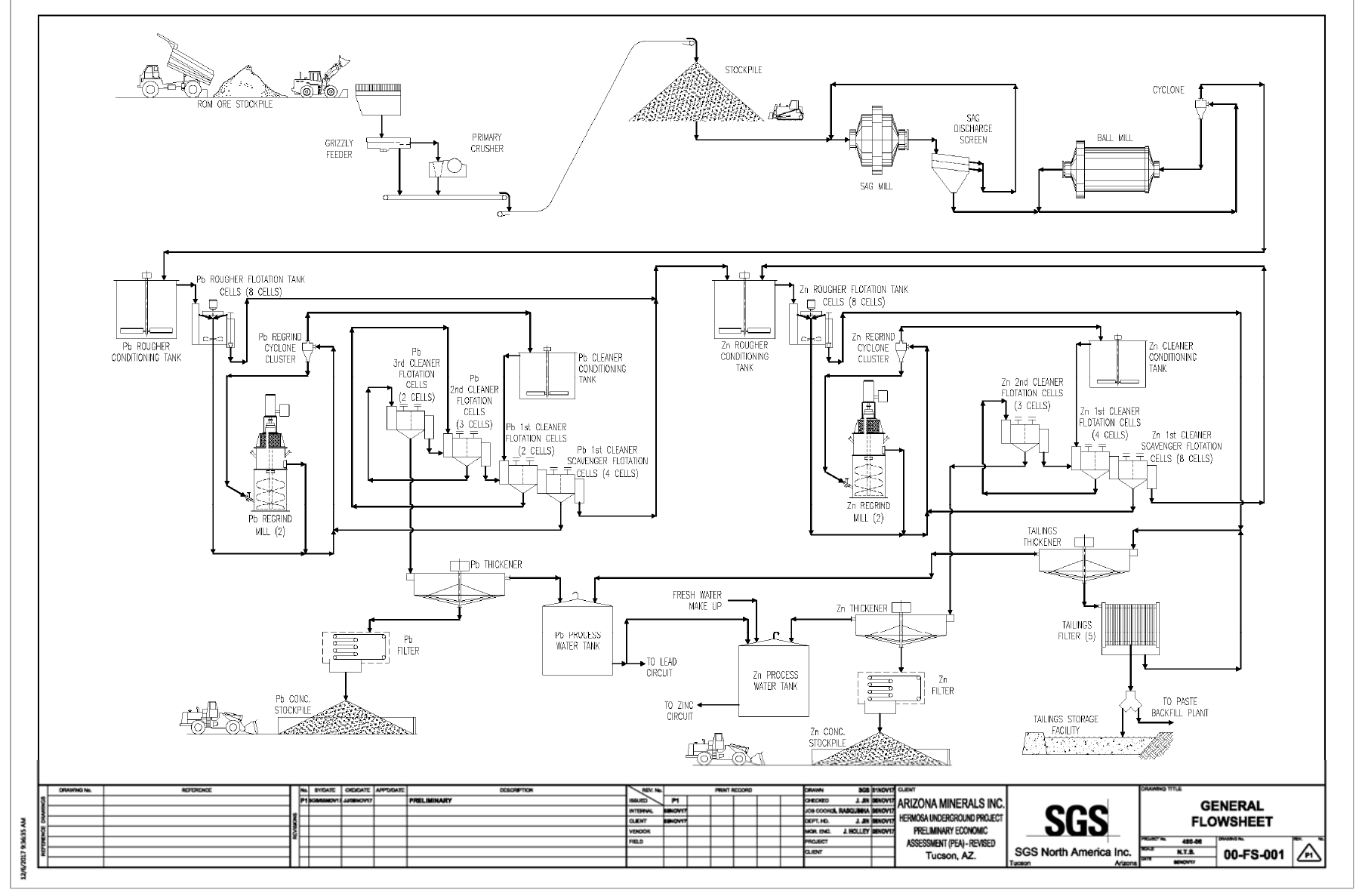
Taylor Deposit process flowsheet: Process plant overall flowsheet

Taylor Deposit Technical Report

This technical report outlines the process design criteria for a mineral processing facility targeting the Taylor Deposit, located 50 miles southeast of Tucson, Arizona. The proposed facility is designed to handle a throughput of 10,000 short tons per day (9,072 tonnes per day) to recover lead, zinc, and silver commodities. The design focuses on a comprehensive flowsheet involving crushing, grinding, and differential flotation to separate the valuable minerals from the run-of-mine material.

Taylor Deposit Technical Report Read Post »

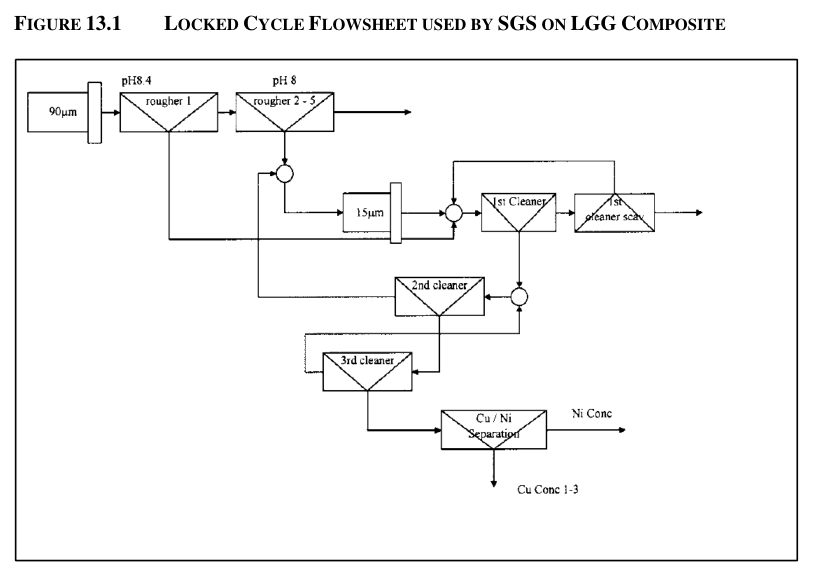
FIGURE 13.1 LOCKED CYCLE FLOWSHEET USED BY SGS ON LGG COMPOSITE

Kenbridge Nickel Project PEA

This section of the Technical Report outlines the proposed recovery methods for the Kenbridge Nickel Project. The process plant is designed for a nominal capacity of 1,500 tpd with a surge capability of 2,000 tpd. Mineralized material will be sourced from underground mining and processed through a conventional facility including crushing, grinding, flotation, and concentrate handling.

Kenbridge Nickel Project PEA Read Post »

Scroll to Top