Mineral Processing Circuit

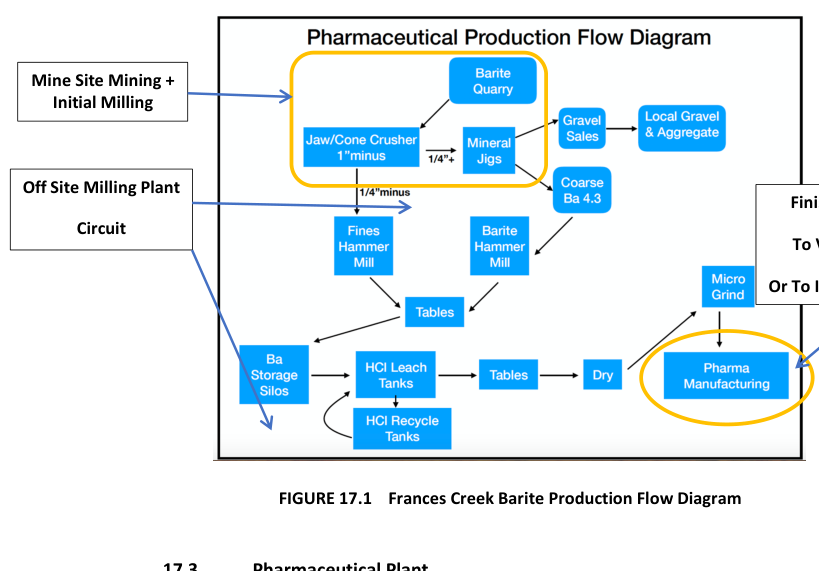
FIGURE 17.1 Frances Creek Barite Production Flow Diagram

Frances Creek Prospect Technical Report

This section outlines the proposed recovery methods for the Frances Creek Prospect, which is currently in the exploration stage. While NI 43-101 does not require recovery details for exploration projects, Voyageur has developed a conceptual milling plan to benefit potential investors. The plan involves on-site crushing and gravity separation of barite, followed by off-site milling and acid washing to produce high-purity barite powder.

Frances Creek Prospect Technical Report Read Post »
Huguenot Coal Project — Technical Report

The Huguenot Coal Project Technical Report outlines the recovery methods for a Preliminary Economic Assessment (PEA) of the Huguenot Coal Project located in the Liard Mining Division of British Columbia, Canada. The proposed Coal Handling and Preparation Plant (CHPP) is designed with a capacity to process approximately 4.0 Mt/y of Run-of-Mine (ROM) coal. A key design objective is to achieve a product total moisture content of 7.5% or less, prioritizing mechanical dewatering methods over traditional thermal drying to manage capital and operating costs while adhering to environmental constraints.

Huguenot Coal Project — Technical Report Read Post »

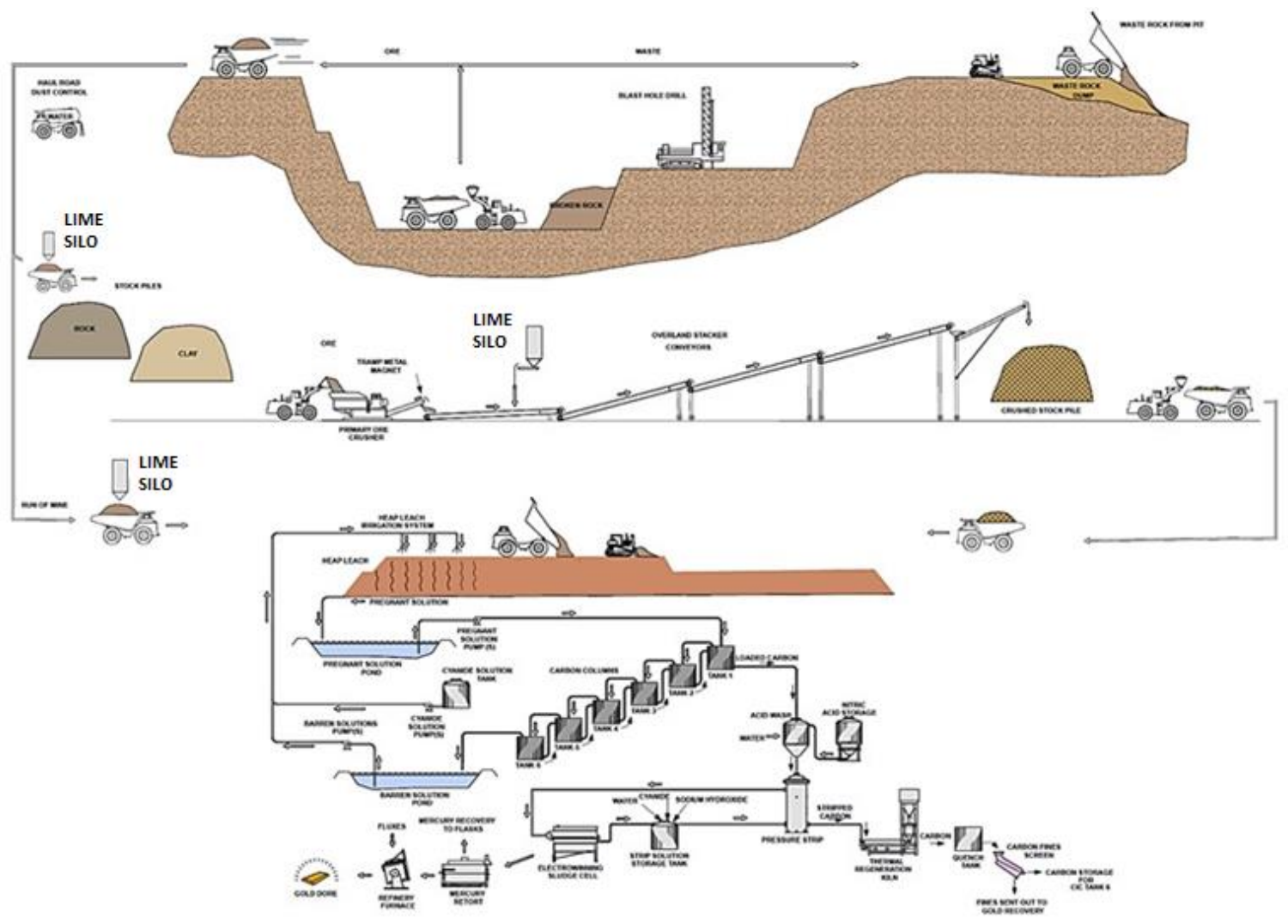
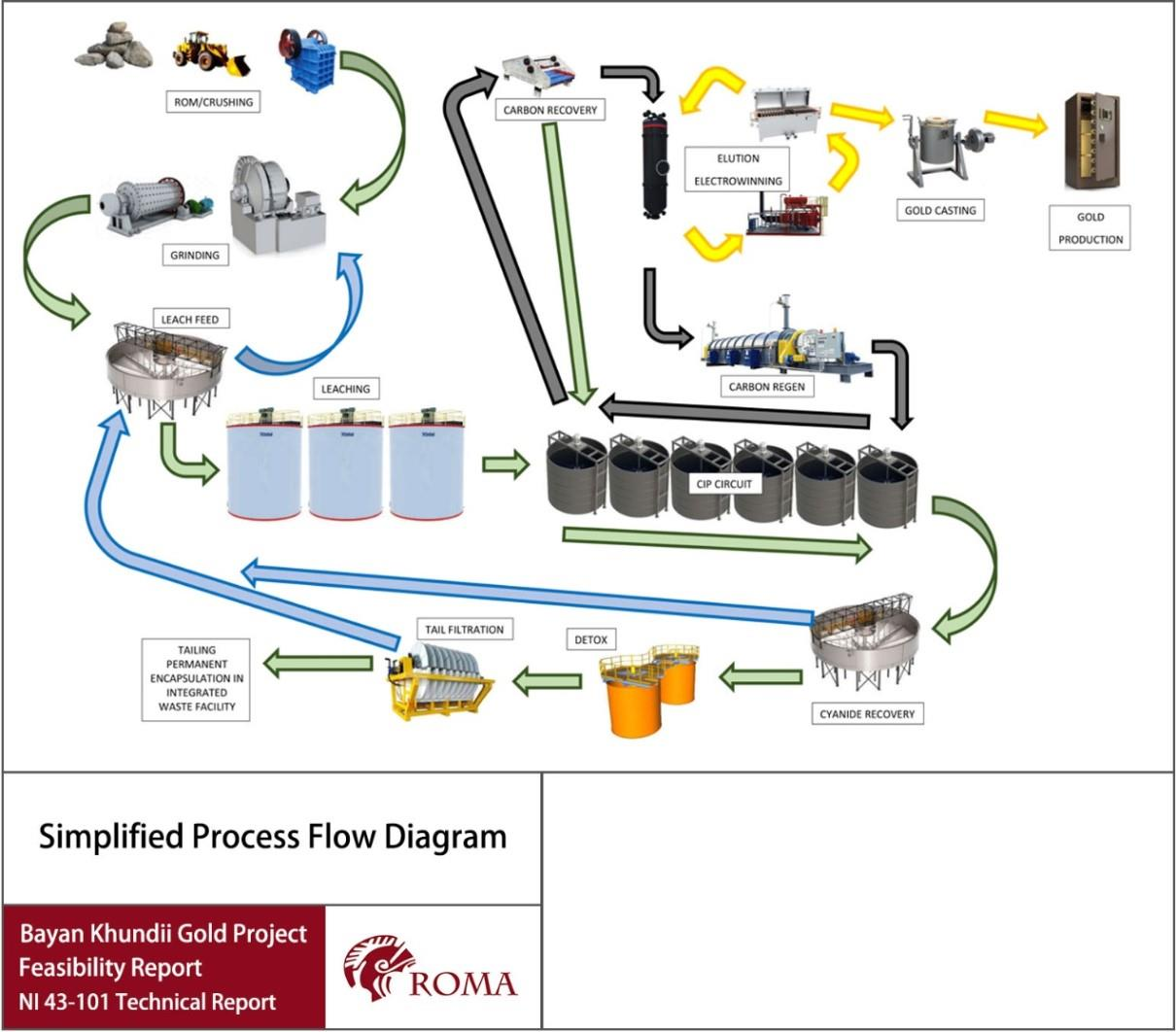
Bayan Khundii Gold Project process flowsheet:

Bayan Khundii Gold Project — Feasibility Study Update

This Feasibility Study Update for the Bayan Khundii Gold Project presents a Class 2 estimate based on a complete engineered design. The process plant is designed to handle an annual throughput of 650,000 tonnes per annum (tpa), processing ore with an average gold head grade of 3.98 g/t. The design incorporates Mongolian structural standards alongside Eurocode guidelines to ensure comprehensive engineering compliance. The study confirms that the ore is amenable to conventional cyanide leaching with recoveries averaging in the low to mid 90s, specifically targeting a 92.7% recovery rate over the life of mine.

Bayan Khundii Gold Project — Feasibility Study Update Read Post »

2019 Itfos Conda Recovery Methods Technical Report

This section details the recovery methods for the Conda Phosphate Plant (CPP) Wash Plant located at Soda Springs, Idaho. The plant processes phosphate ores delivered from mines including Rasmussen Valley Mine (RVM) and potential H1 and NDR deposits. The current flowsheet involves horizontal scrubbing, sizing, crushing, rod milling, classification, and dewatering to produce a beneficiated phosphate concentrate suitable for the Phosphate Acid Plant (PAP).

2019 Itfos Conda Recovery Methods Technical Report Read Post »

Candelones Oxide PEA Technical Report

The Candelones Oxide Pre-Feasibility Study (PEA) outlines a heap leach processing method designed to treat 5,000 tonnes per day of mineralization from an open pit operation. The process involves crushing run-of-mine material using a mineral sizer to less than 150 mm, mixing with hydrated lime, and stacking on a heap leach pad. The design targets an average gold recovery of 75% over a 10-week leach cycle using a 0.05% sodium cyanide solution.

Candelones Oxide PEA Technical Report Read Post »

White Pine North Project process flowsheet: Mining and Processing Flowsheet for Pan Mine

White Pine North Project — 2023 Preliminary Economic Assessment

The White Pine North Project Preliminary Economic Assessment outlines a process plant design focused on producing copper concentrate. The facility is engineered for a nominal throughput of 15,000 tons per day, utilizing a flowsheet that includes grinding, classification, rougher flotation, and a three-stage cleaner flotation circuit employing both flotation cells and columns. Final concentrate processing involves thickening and filtration, with tailings managed via pumping to a common Tailings Disposal Facility.

White Pine North Project — 2023 Preliminary Economic Assessment Read Post »

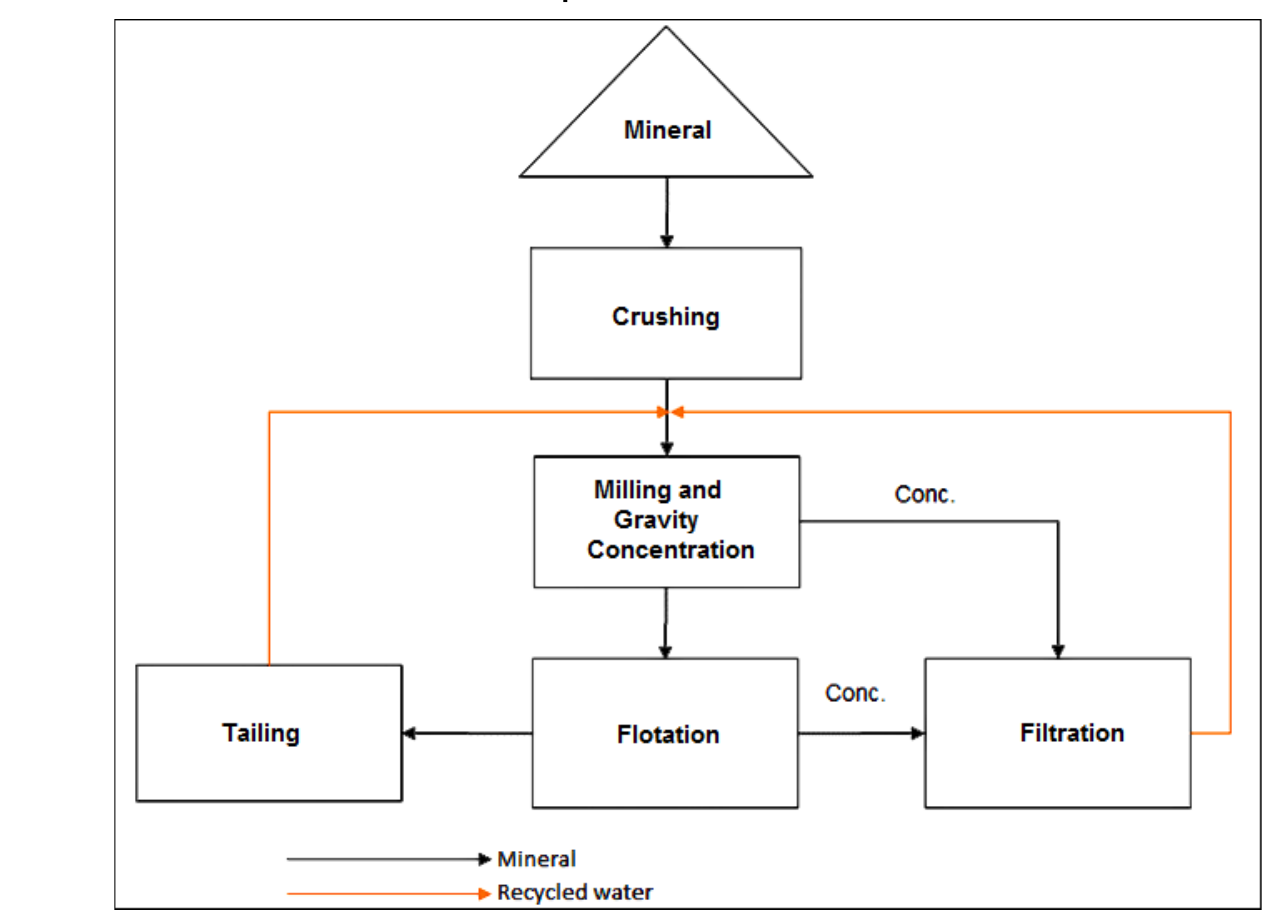
Cisneros Project process flowsheet: Conceptual Process Flowchart

Cisneros Mineral Resource Update & PEA — 2018

The metallurgical process objective is to obtain gravity and flotation concentrates in a plant with a capacity of 500 tonnes per day (tpd). The plant will be composed of a single production line in two conventional processes namely gravity followed by flotation to obtain sulphide concentrates containing gold. The process path involves a dry section consisting of crushing (primary and secondary stages) and milling and a wet plant comprising gravity concentration, flotation and filtration of concentrates where gold is recovered.

Cisneros Mineral Resource Update & PEA — 2018 Read Post »

Figure 17-1 Simplified Process Flow Sheet

Ruby Creek Project — 2022 Technical Report

This technical report outlines the recovery methods for the Ruby Creek Project, referencing previous feasibility studies by Wardrop Engineering and MinnovEX. The process plant design aims to produce a final molybdenite concentrate with a grade of 54% molybdenum and an overall recovery rate of 90% from a feed grade of 0.087% molybdenum. The circuit is designed to operate at an average throughput of 20,000 metric tonnes per day with a plant availability of 92%.

Ruby Creek Project — 2022 Technical Report Read Post »

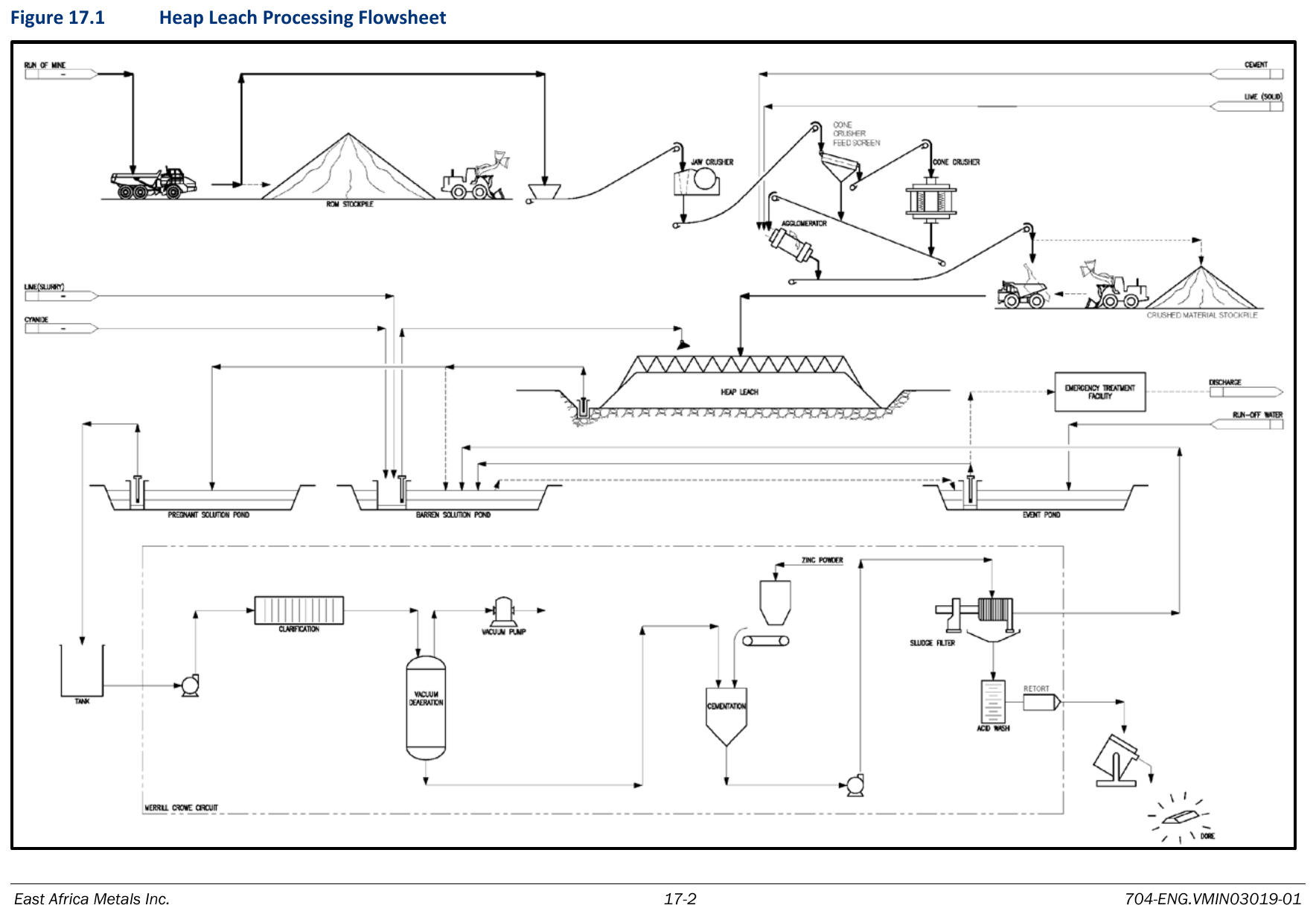
Terakimti Oxide Deposit process flowsheet: Heap Leach Processing Flowsheet

NI 43-101 Technical Report — Terakimti Oxide Deposit, Harvest Project

This NI 43-101 Technical Report and Preliminary Economic Assessment outlines the proposed recovery methods for the Terakimti Oxide Deposit within the Harvest Project in Ethiopia. Based on test work conducted by BCR in 2013 and SGS in 2016, the oxide zone is amenable to conventional cyanide leaching. The study proposes heap leaching technology over agitated tank leaching due to satisfactory gold extraction kinetics, lower capital and operating costs, and reduced project complexity.

NI 43-101 Technical Report — Terakimti Oxide Deposit, Harvest Project Read Post »

Amended and Restated NI 43-101 Technical Report — Penco REE Project

This NI 43-101 Technical Report outlines the Preliminary Economic Assessment for the Penco Rare Earth Element project, dated December 2021. The project focuses on the production of rare earth carbonates from ionic clay minerals. The processing plant is designed to handle a feed rate of 240 wet tonnes per hour, resulting in an annual production of 1,275 tonnes of dry rare earth carbonate product.

Amended and Restated NI 43-101 Technical Report — Penco REE Project Read Post »

Scroll to Top