Mineral Processing Circuit

Figure 13.1 Flow Sheet for 2017 – 2018 METTS Composites

Igor Project — 2019 Technical Report

The 2019 Technical Report and Preliminary Feasibility Study (PFS) for the Igor Project (Callanquitas mine) outlines a heap-leach operation for oxide ores. The design considers a two-stage development starting at 350 tpd and expanding to 500 tpd. The process involves three-stage crushing, cement agglomeration, cyanide heap leaching, and gold-silver recovery via a Merrill-Crowe circuit. Estimated reserves are 1,030,000 tonnes with a mine life of 8.6 years. Gold recovery is estimated at 80% and Silver at 33%.

Igor Project — 2019 Technical Report Read Post »
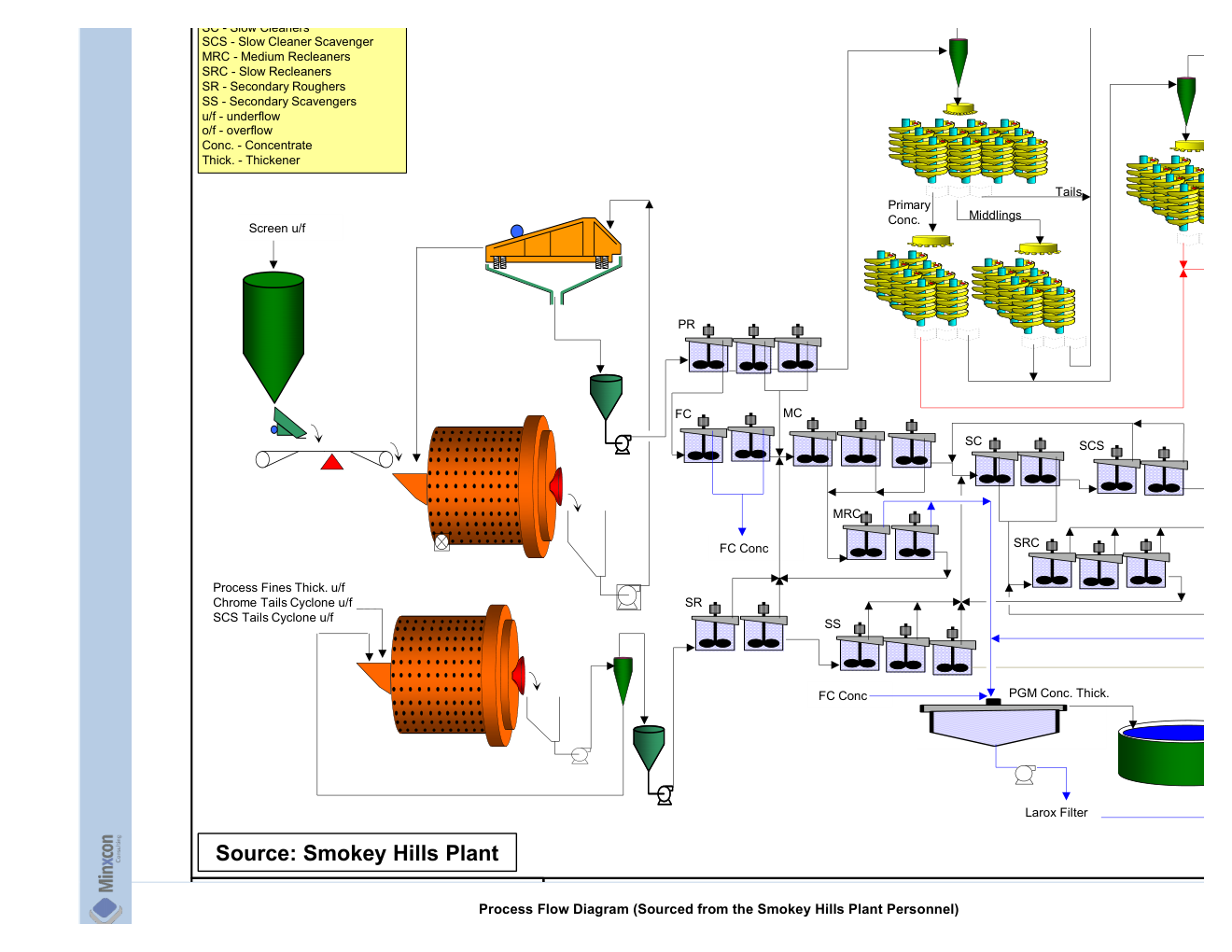
Process diagram from technical-report PDF page 86

Smokey Hills Platinum Mine — 2016 Technical Report Update

This technical report update details the recovery methods and processing efficiencies for the Smokey Hills Platinum Mine, located in the Limpopo Province of South Africa. The plant utilizes a typical UG2 processing configuration with a mill-float-mill-float (MF2) setup, designed with a capacity of 60 ktpm. The processing circuit includes primary and secondary crushing, ball milling, forced air flotation cells, and a chrome spirals recovery circuit. Historic data from 2011 to 2012 indicates an average throughput of 28.6 ktpm with a 4E recovery rate averaging 78.2%.

Smokey Hills Platinum Mine — 2016 Technical Report Update Read Post »

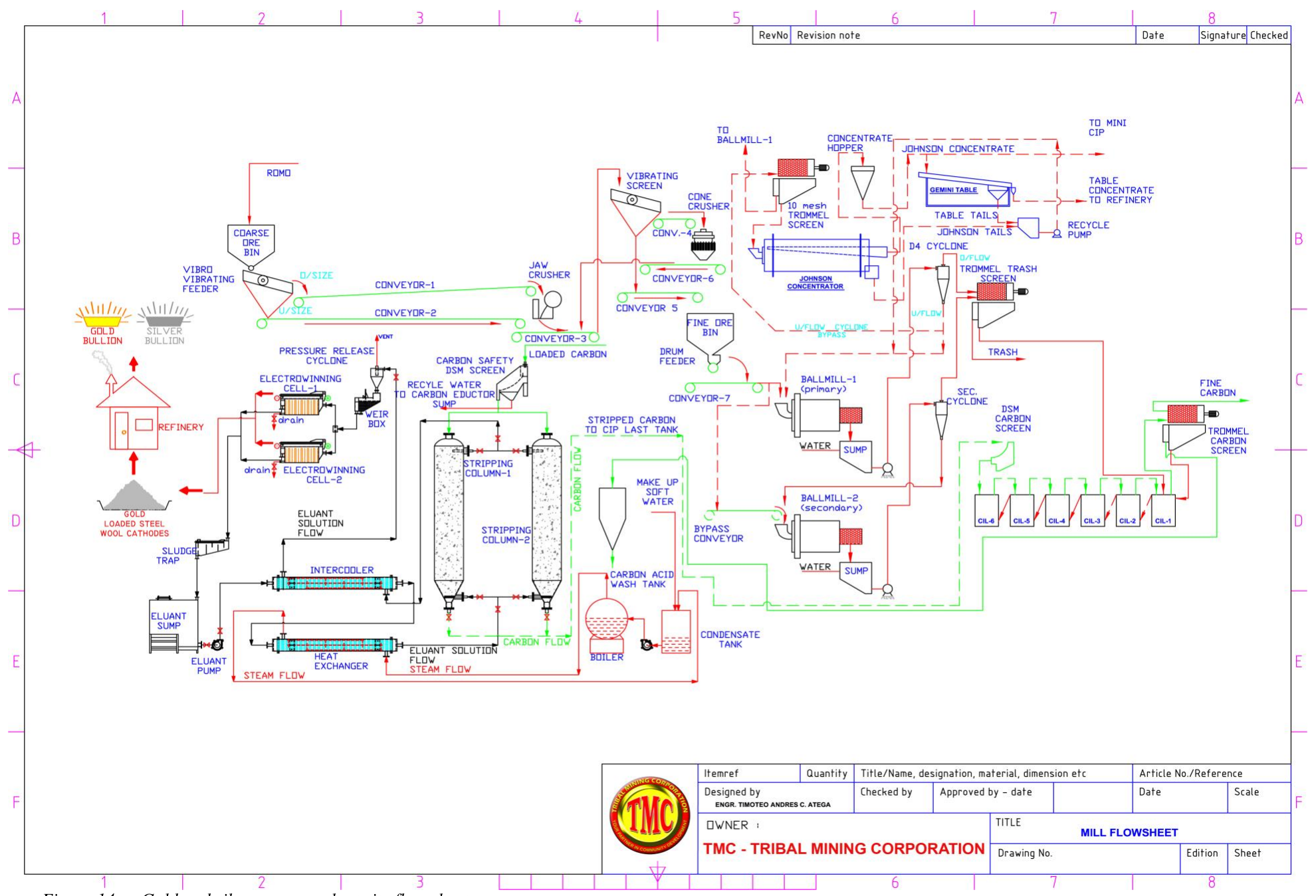
T'Boli Gold and Silver Project (Cadan) process flowsheet: Gold and silver process plant site flow sheet

T’Boli Gold-Silver Project in the Philippines Has a 200 t/d CIP Plant Ready for Trial Processing, With Gravity Recovery and Detoxified Tailings

The NI 43-101 report for Cadan Resources, effective October 1, 2012, says limited lab work supports conventional carbon processing, and gives an operating work index averaging 18.8 kWh/t.

T’Boli Gold-Silver Project in the Philippines Has a 200 t/d CIP Plant Ready for Trial Processing, With Gravity Recovery and Detoxified Tailings Read Post »

Queensway Gold Project — 2025 Technical Report

This NI 43-101 Technical Report outlines a Pre-Feasibility Study (PEA) for the Queensway Gold Project by New Found Gold Corp. The project utilizes a two-phase processing approach to optimize capital efficiency and revenue generation. Phase 1 (Years 1-5) involves mining high-grade material from the Keats and Iceberg zones, which will be crushed and sent to a third-party toll mill for treatment. Lower-grade material will be stockpiled for future processing. This strategy allows for early revenue while the new on-site plant is constructed, and utilizes mined-out pits for tailings disposal, eliminating the need for surface impoundments.

Queensway Gold Project — 2025 Technical Report Read Post »

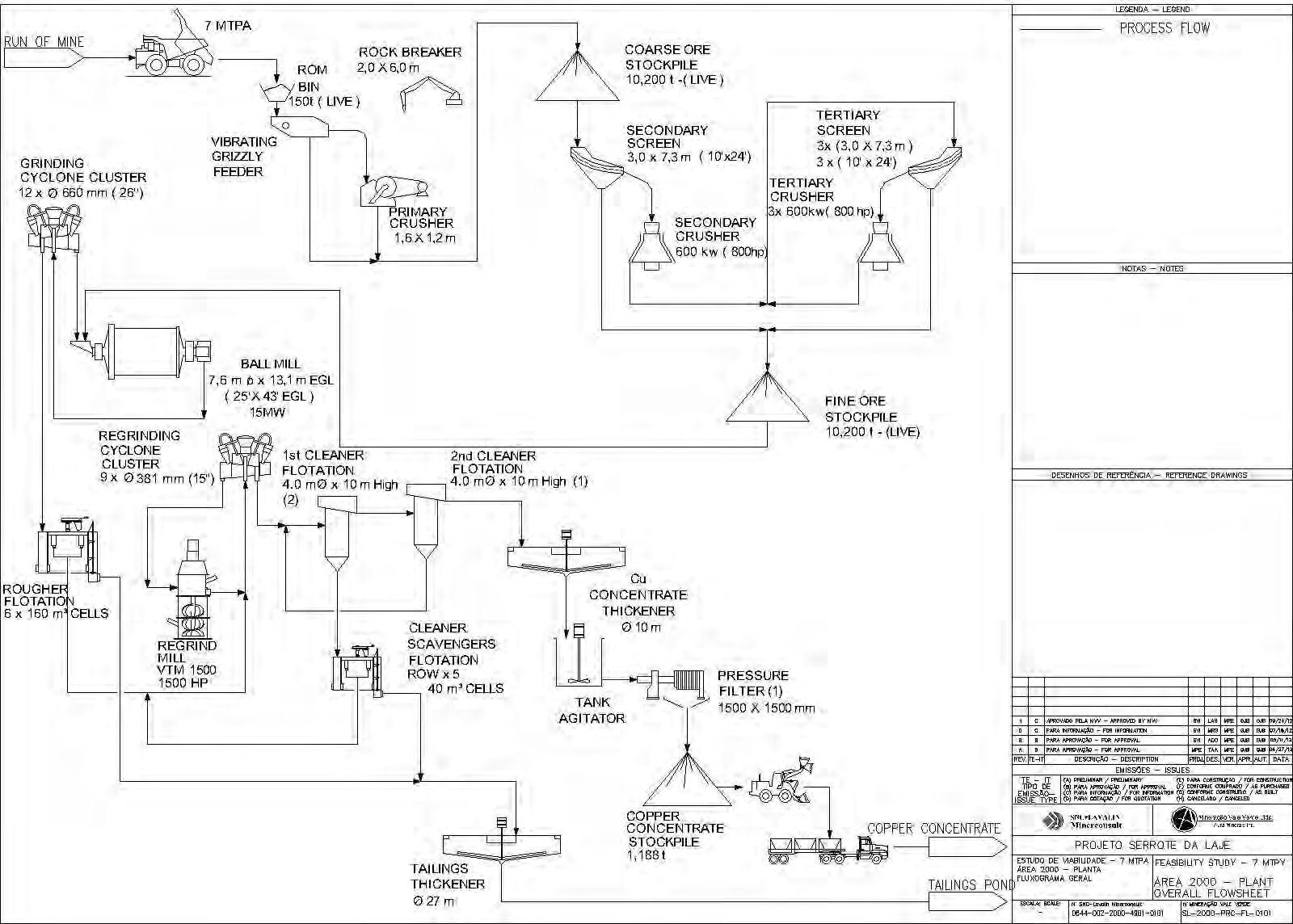
Serrote Project process flowsheet:

Serrote Project — Feasibility Study

The Serrote Project Feasibility Study details the design of a processing plant for the recovery of copper and gold from open pit ore. The facility has a nominal name-plate capacity of 7.0 Mt/y, equivalent to 19,178 t/d. The process flow includes primary, secondary, and tertiary crushing stages, followed by single-stage ball mill grinding in a closed circuit with cyclones. The design targets average recoveries of 84% for copper and 65% for gold, producing a concentrate with grades of 24.5% Cu and 3.34 g/t Au.

Serrote Project — Feasibility Study Read Post »

Figure 17.2 Block flowsheet for flotation and tailings

Taca Taca 2026 Technical Report Designs a 120,000 t/d Twin SAG-Ball Copper-Molybdenum Concentrator That Repulps Tailings With Brine

Section 17 of the NI 43-101 Technical Report outlines the preferred processing route for the Taca Taca Project. The plant is designed to treat both supergene (oxide) and hypogene (sulphide) primary ores typical of porphyry copper-molybdenum deposits. The process follows conventional South American concentrator designs but includes a sulphidising flotation circuit using sodium hydrosulphide (NaHS) to treat oxidised and tarnished minerals. The design is based on experience from the Company’s Sentinel and Cobre Panamá installations.

Taca Taca 2026 Technical Report Designs a 120,000 t/d Twin SAG-Ball Copper-Molybdenum Concentrator That Repulps Tailings With Brine Read Post »

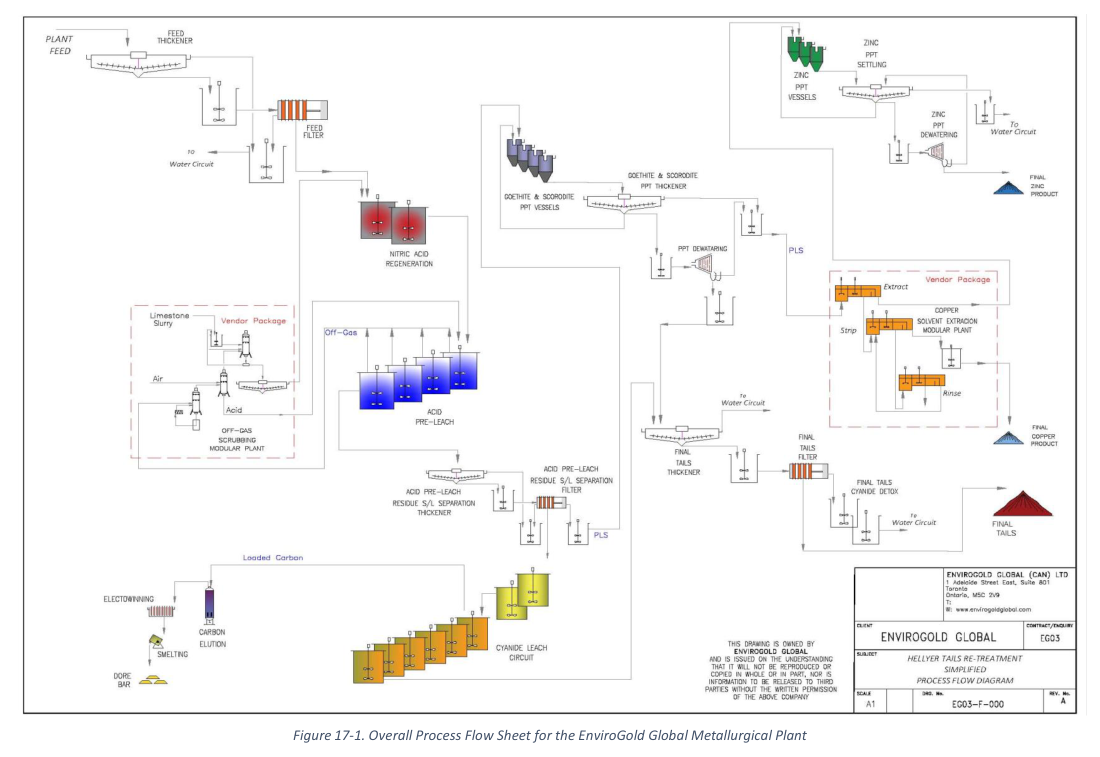
Figure 17-1. Overall Process Flow Sheet for the EnviroGold Global Metallurgical Plant

Hellyer Tailings Project — 2022 Technical Report

EnviroGold Global proposes a hydrometallurgical reprocessing plant at the Hellyer site to treat tailings from former and current Pb/Zn flotation operations. The project is designed in two stages, with Phase 1 targeting 500 tonnes per day and Phase 2 expanding to 3,500 tonnes per day. The facility will operate at a nominal throughput rate of 156 tph (dry) with 93.5% availability.

Hellyer Tailings Project — 2022 Technical Report Read Post »

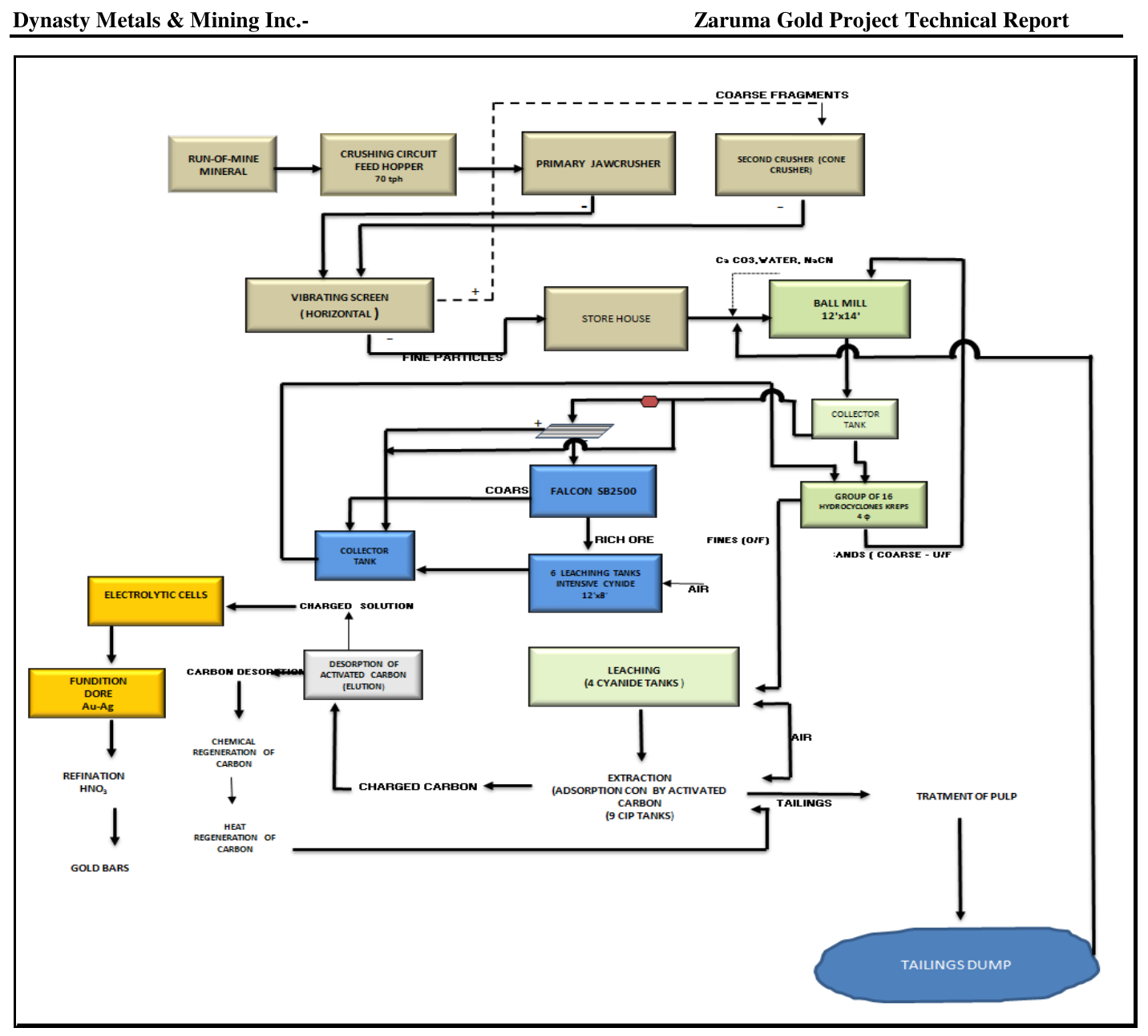
Zaruma Gold Project process flowsheet: Schematic of Processing Flowsheet

Zaruma Gold Project — 2014 Technical Report

The Zaruma Gold Project processing plant is currently operating at a throughput of 700 to 800 tonnes per day (tpd), utilizing approximately 64% of its installed capacity of 1100 tpd. This capacity constraint is primarily attributed to the underground mine’s ability to supply additional material from development and stoping operations. Historical production data from 2011 to 2013 indicates a total gold production of 52,919 ounces and silver production of 126,693 ounces, with metallurgical recoveries improving over time.

Zaruma Gold Project — 2014 Technical Report Read Post »

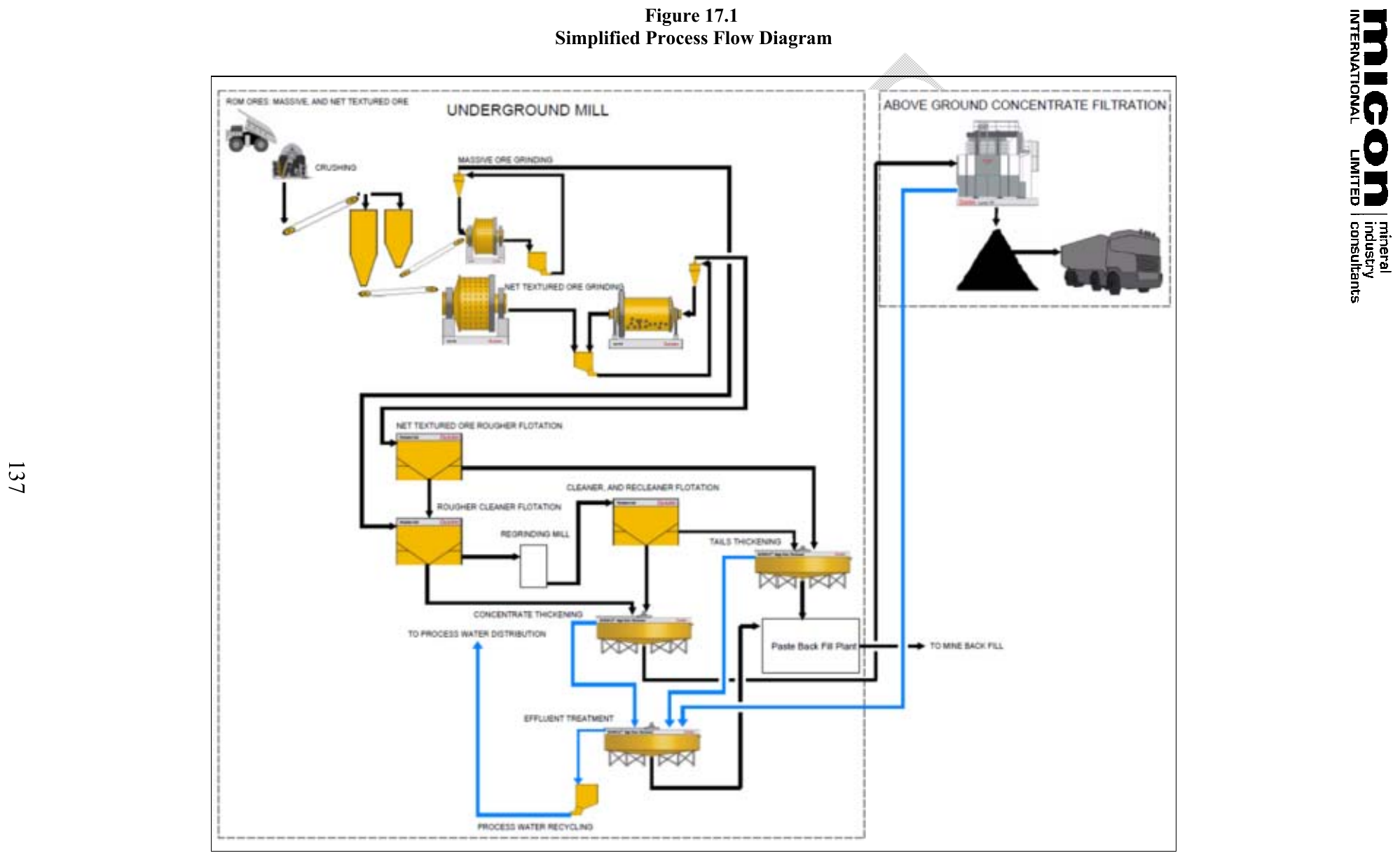
Eagle’s Nest Project process flowsheet:

Eagle’s Nest Project — 2012 Feasibility Study

The Eagle’s Nest project is a feasibility study for a 3,000 t/d nickel-copper ore processing facility located in the Ring of Fire area of Ontario. The project is designed as an underground mine with the process plant also located underground, utilizing conventional crushing, grinding, flotation, and concentrate dewatering to produce a single nickel-copper concentrate. The facility targets a life-of-mine average throughput of 1,095,000 tonnes per year.

Eagle’s Nest Project — 2012 Feasibility Study Read Post »

Scroll to Top