Mineral Processing Circuit

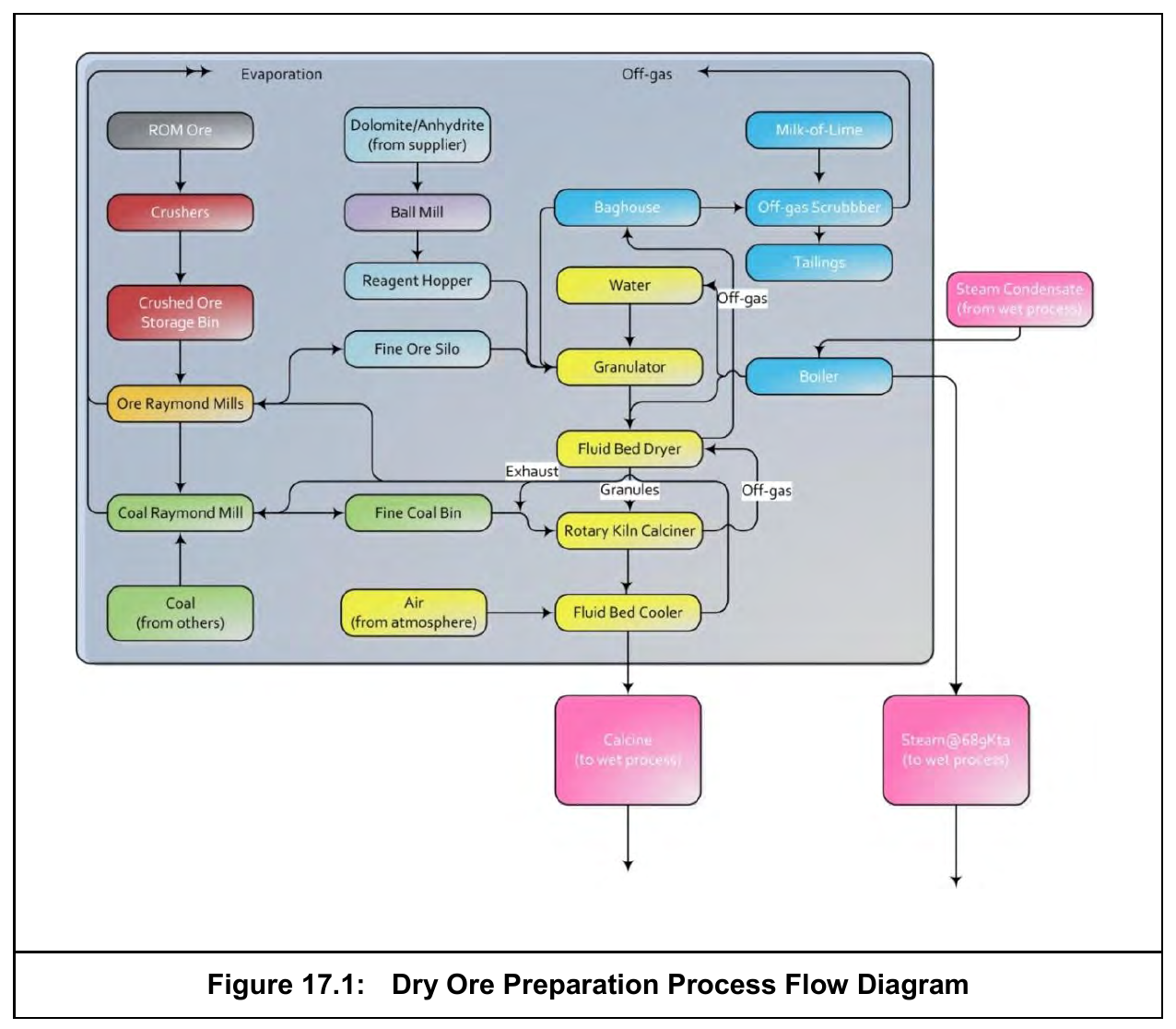
Kings Valley Lithium Project process flowsheet: Dry Ore Preparation Process Flow Diagram

Kings Valley Lithium Project — 2012 Technical Report

This Preliminary Feasibility Study (PFS) outlines the processing methods for the Kings Valley Lithium Project. The plant is designed for a throughput of 2,100 tpd, operating 365 days per year. The facility consists of a dry ore preparation circuit and a wet recovery circuit. Key products include Lithium Carbonate (Li2CO3), Potassium Sulfate (K2SO4), and Sodium Sulfate (Na2SO4). The process utilizes roll crushers, Raymond mills, and a rotary calciner for ore preparation, followed by agitated tank leaching and crystallization for product recovery.

Kings Valley Lithium Project — 2012 Technical Report Read Post »

Record Ridge Project — 2022 Technical Report

This NI 43-101 Technical Report presents a Preliminary Economic Assessment (PEA) for the Record Ridge Project in British Columbia, Canada, developed by WHY Resources. The study outlines a process to extract magnesium from magnesium oxide bearing material with a treatment rate of 3,000 tonnes per day. The proposed flowsheet utilizes a hydrometallurgical approach involving crushing, grinding, and sulfuric acid leaching to recover magnesium.

Record Ridge Project — 2022 Technical Report Read Post »

COSE Project — 2012 Technical Report

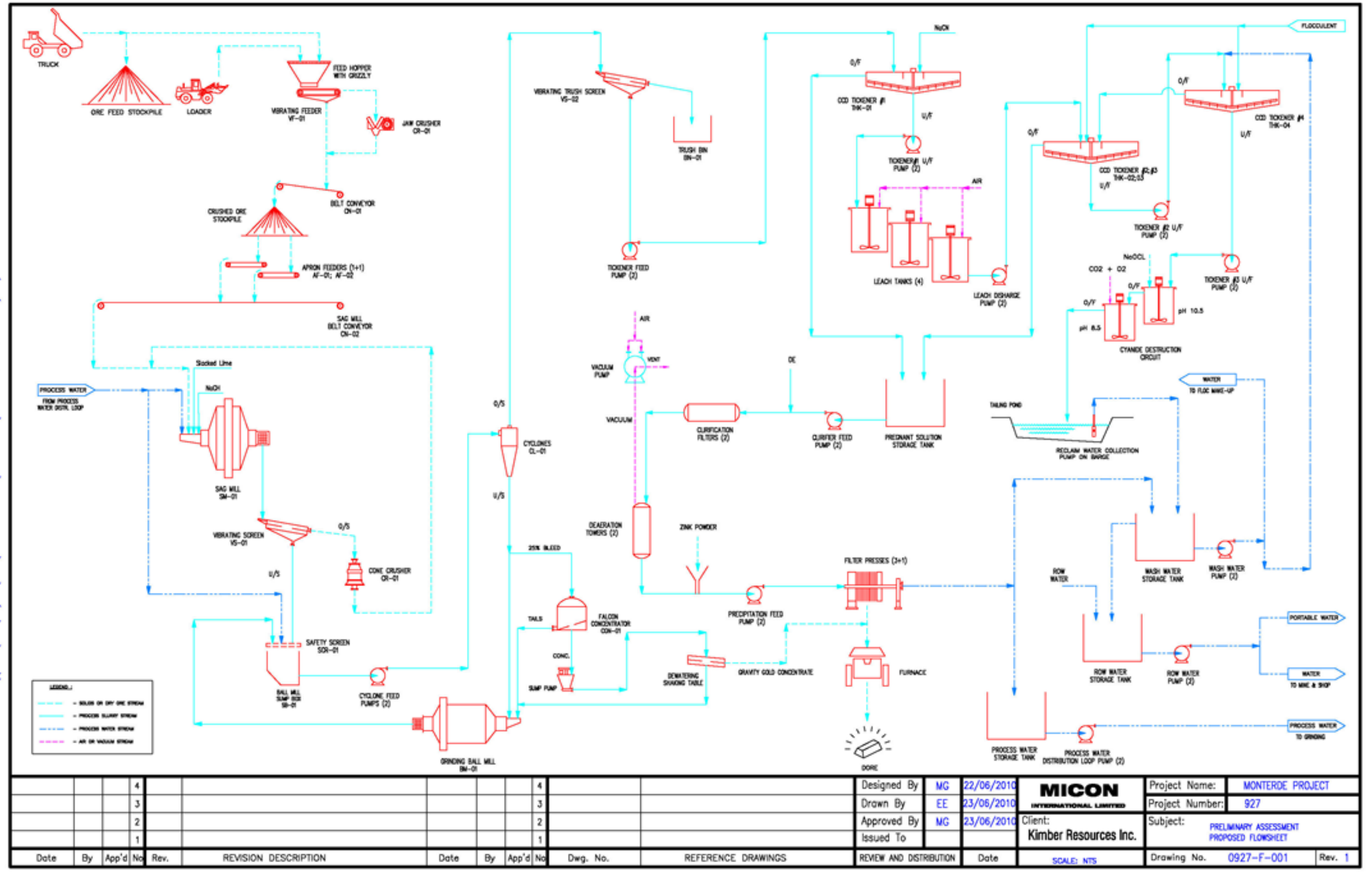
This section of the NI 43-101 Technical Report details the metallurgical testing and process route selection for the COSE Project. SGS Minerals Services in Santiago, Chile conducted a series of tests on 25 composite samples derived from 70 individual samples across oxidized, partially oxidized, and non-oxidized portions of fault-hydrothermal breccia hosted and veinlet gold mineralization. The testing included screen fire assays, gravitational concentration using a Knelson concentrator, and bottle roll cyanide leaching tests.

COSE Project — 2012 Technical Report Read Post »

Klaza Project — 2018 Technical Report

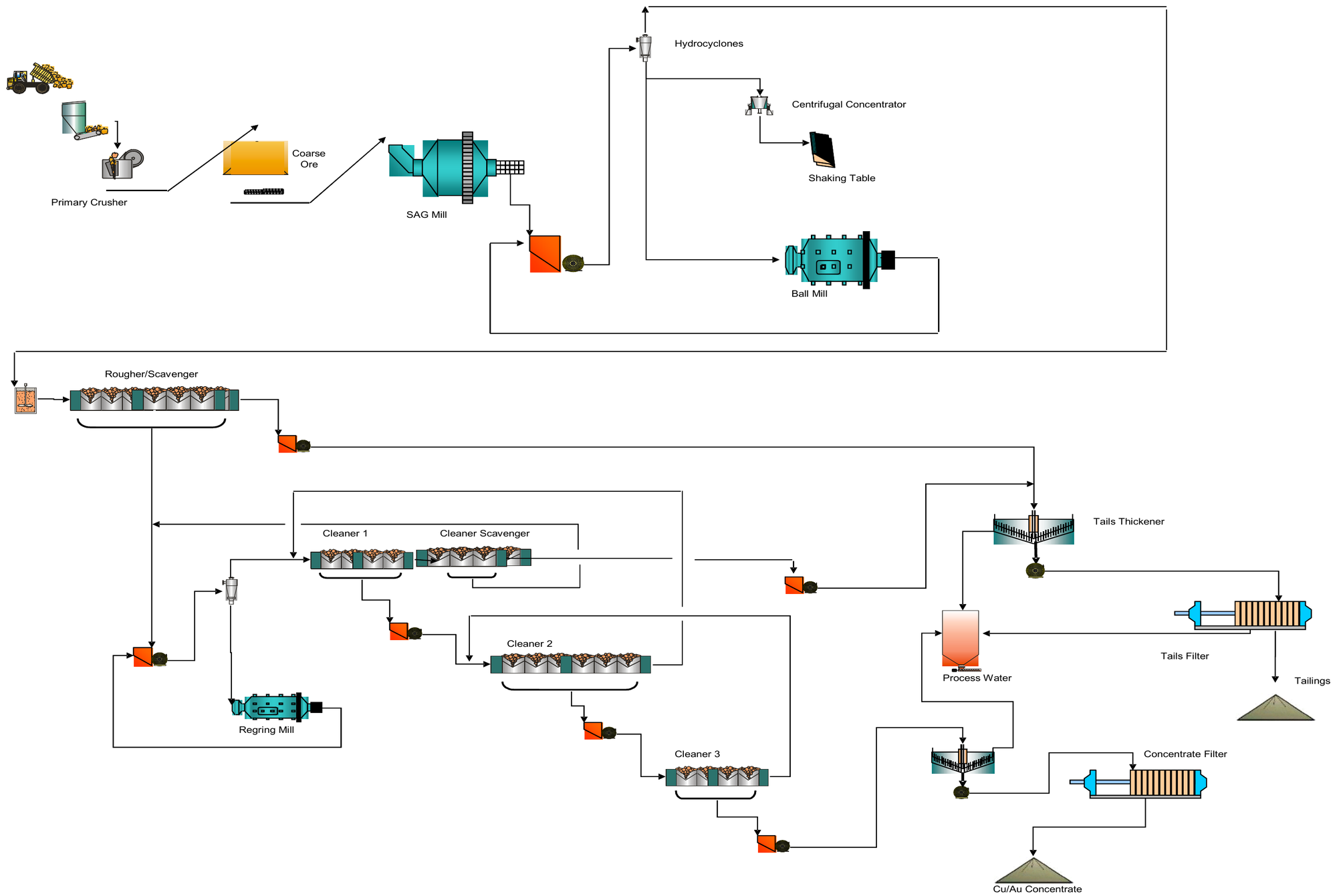
This technical report details updated diamond drilling, metallurgical testing, and mineral resources for the Klaza Project in Yukon, Canada. The report outlines a processing flowsheet that incorporates gravity pre-concentration to reduce grinding circuit tonnage by approximately 50%. The process involves crushing run-of-mine material to 9.5 mm, screening fines, and gravity concentration on the coarse fraction. The resulting concentrate is blended with fines and fed to a grinding circuit followed by sequential rougher and cleaner flotation to produce gold-rich lead and zinc concentrates.

Klaza Project — 2018 Technical Report Read Post »

Copper Creek Project — 2023 Technical Report

The report details the recovery methods for the Copper Creek Project, outlining two distinct process flowsheets designed to treat mineralized materials from various deposits. The primary process utilizes froth flotation to beneficiate copper, molybdenum, and silver from transitional and sulphide materials, with a nominal throughput of 30,000 t/d. The second process extracts copper from oxide materials via heap leaching, solvent extraction, and electrowinning, with a nominal throughput of 6,850 t/d.

Copper Creek Project — 2023 Technical Report Read Post »

Lost Creek’s ISR Plant, Running Since 2013, Recovers Uranium by Ion Exchange, HCl Decarbonation and Peroxide Precipitation

The Lost Creek ISR Uranium Property utilizes an In Situ Recovery (ISR) method for uranium extraction, with a processing plant operational since August 2013. The facility comprises four major solution circuits: uranium recovery via ion exchange (IX), elution to strip uranium from resin, yellowcake precipitation, and dewatering, drying, and packaging. The process involves pumping production fluid containing dissolved uranyl carbonate to the plant, where uranium is extracted onto resin, eluted, and precipitated using hydrogen peroxide and sodium hydroxide.

Lost Creek’s ISR Plant, Running Since 2013, Recovers Uranium by Ion Exchange, HCl Decarbonation and Peroxide Precipitation Read Post »

Scroll to Top