Mineral Processing Circuit

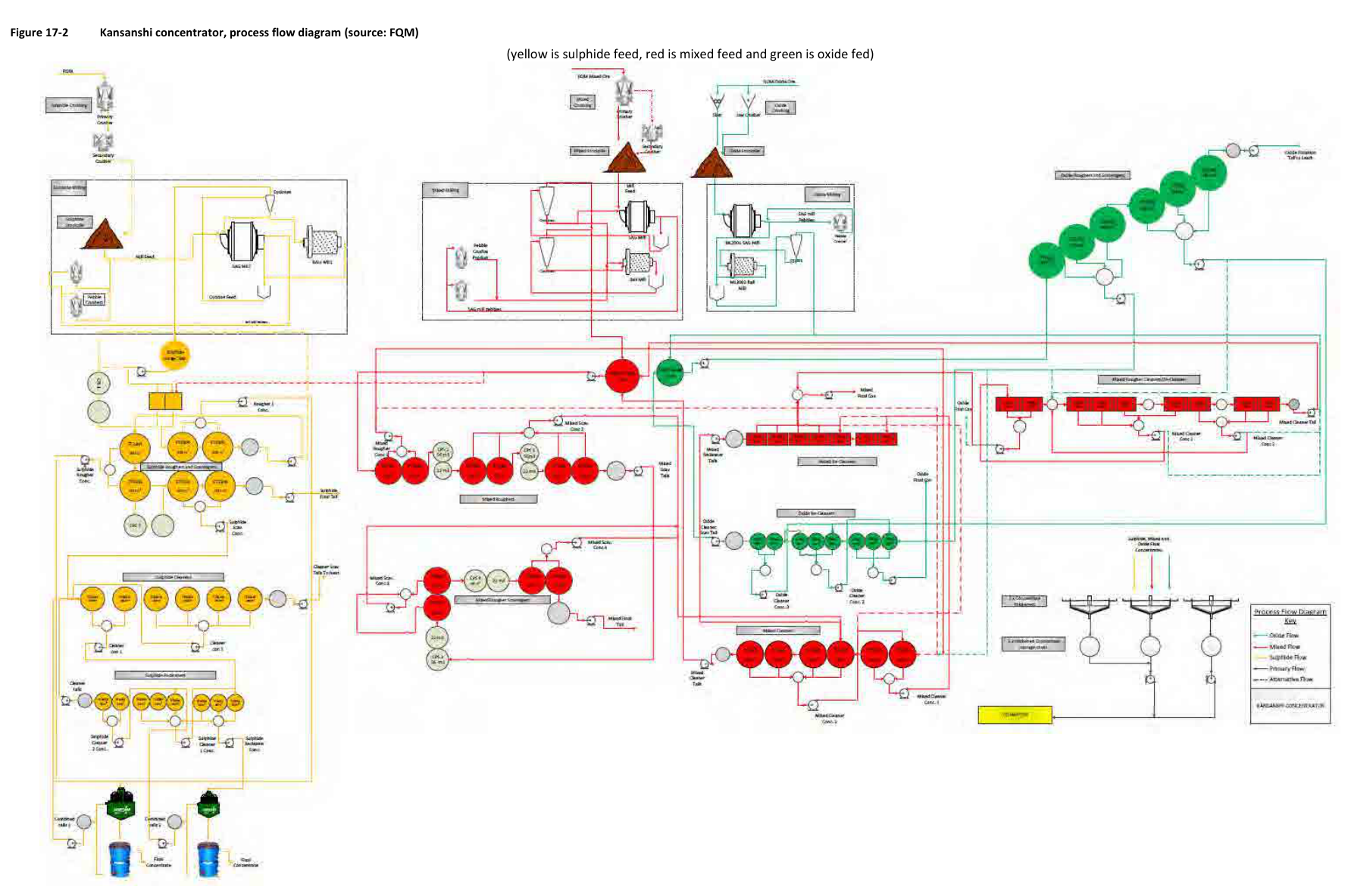
Figure 17-2 Kansanshi concentrator, process flow diagram (source: FQM)

Kansanshi Operations — 2024 Technical Report

The Kansanshi Operations in Zambia comprise three main processing circuits: an oxide circuit with a capacity of 7 Mtpa, a mixed ore circuit with 8 Mtpa, and a sulphide circuit with 13 Mtpa. Current total feed capacity is approximately 28 Mtpa, with production data from 2019 to 2023 showing varying recovery rates for copper and gold. The facility utilizes a combination of crushing, milling, flotation, and hydrometallurgical processes to treat oxide, mixed, and sulphide ores. Gold recovery is achieved through natural flotation and gravity concentration using centrifugal concentrators and shaking tables.

Kansanshi Operations — 2024 Technical Report Read Post »
NICO Project — 2012 Technical Report

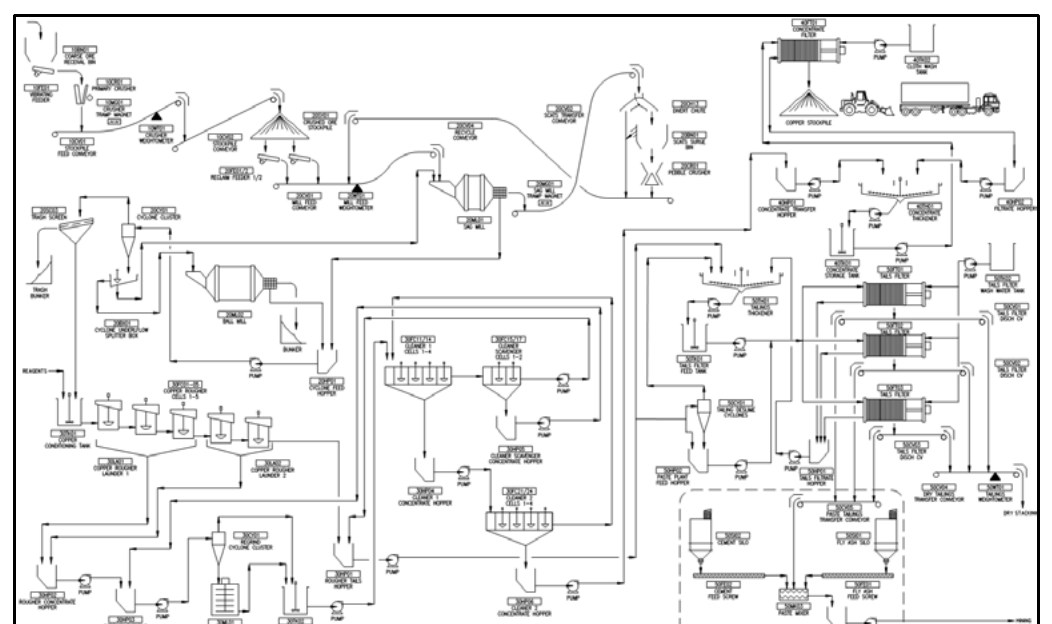
The NICO Project recovery methods involve a two-stage process designed to extract gold, cobalt, bismuth, and copper from sulphide ore. The initial stage occurs at the project site in the Northwest Territories, where a bulk flotation concentrate is produced from underground and open pit mining operations. This concentrate is then transported to the Saskatchewan Metals Processing Plant (SMPP) for hydrometallurgical treatment to separate the individual commodities into saleable products.

NICO Project — 2012 Technical Report Read Post »

Pumpkin Hollow Project process flowsheet: Process Flow Sheet

Pumpkin Hollow Project — 2018 Integrated Study Document

This Technical Report details the recovery methods for the Pumpkin Hollow Copper Project in Yerington, Nevada. Two development options are presented: Case A, a standalone 5,000 stpd underground mine, and Case B, an integrated 70,000 stpd operation combining open pit and underground mining. The processing plant design focuses on a SABC comminution circuit followed by rougher, regrind, and cleaner flotation circuits to produce a copper concentrate targeted at 26.0% Cu.

Pumpkin Hollow Project — 2018 Integrated Study Document Read Post »

Gas Hills ISR Plan Uses Low-pH Sulfuric Acid Leaching With Ion Exchange at a 4,400 gpm Central Plant

The Gas Hills Uranium Project Pre-Feasibility Study outlines an In-Situ Recovery (ISR) operation designed to extract uranium from underground deposits. The project utilizes a satellite facility approach, where the primary Ion Exchange (IX) circuit is located at the Gas Hills site, while downstream processing such as elution, precipitation, and packaging occurs at the Azarga Dewey-Burdock Project. This configuration allows for efficient resource utilization by leveraging existing infrastructure at the Dewey-Burdock facility.

Gas Hills ISR Plan Uses Low-pH Sulfuric Acid Leaching With Ion Exchange at a 4,400 gpm Central Plant Read Post »

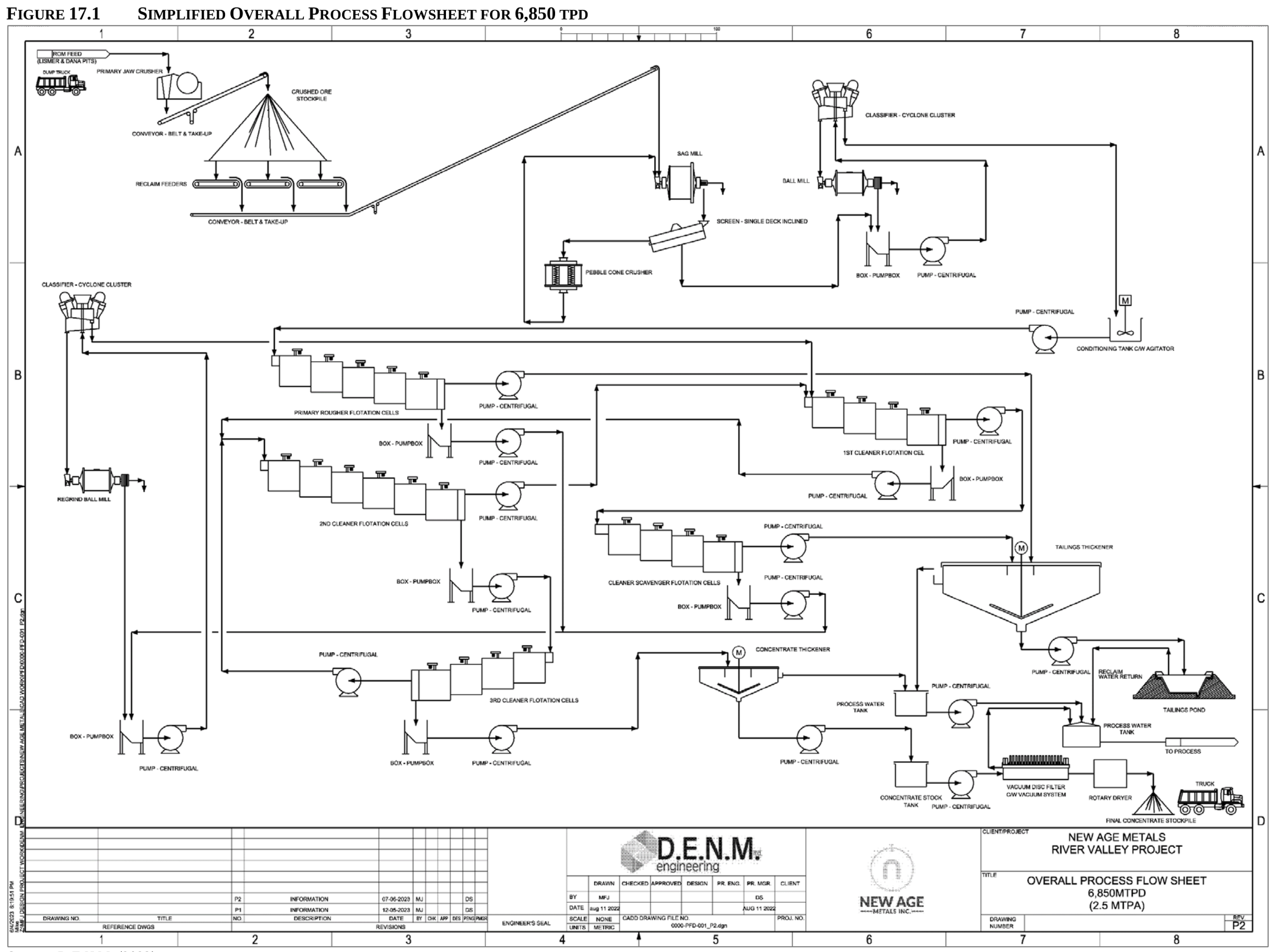
River Valley Project process flowsheet: SIMPLIFIED OVERALL PROCESS FLOWSHEET FOR 6,850 TPD

River Valley Project — 2023 Technical Report (PEA)

This Technical Report section details the recovery methods for the River Valley Project crushing and process facilities. The process plant design is based on a nominal 6,850 mtpd throughput, treating sulphide material from the Dana and Lismer Zones via conventional flotation operations. The proposed mining and processing schedule supports a 16-year mine life, with process water recovery completed via a tailings thickener and TMF water recapture.

River Valley Project — 2023 Technical Report (PEA) Read Post »

Mt. Hamilton Gold and Silver Project — 2014 Technical Report

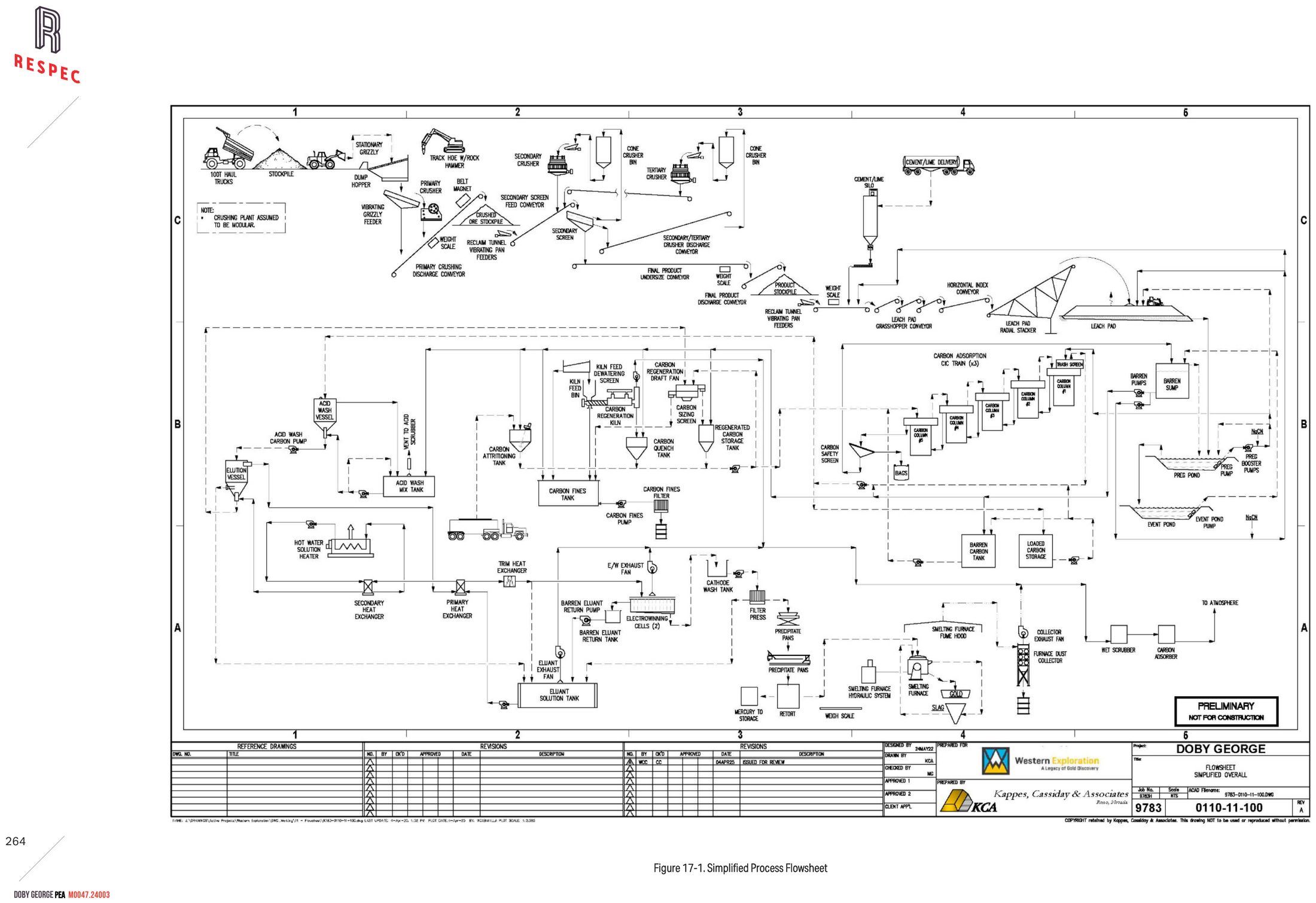
The Mt. Hamilton Project is a gold and silver development project located in Nevada, USA, utilizing an open-pit mining method with a heap leach recovery process. The project is designed to process a leachable reserve of approximately 22.5 Mt of crushed ore from the Seligman and Centennial open pits. The recovery method involves a multi-lift heap leach with a carbon ADR (Adsorption, Desorption, Refining) plant, which was designed by KCA of Reno, Nevada, to facilitate detailed costing and construction scheduling for the 2014 Feasibility Study.

Mt. Hamilton Gold and Silver Project — 2014 Technical Report Read Post »

Eagle Gold Mine — 2023 Technical Report

This technical report section details the process description and recovery methods for the Eagle Gold project. The gold recovery process is designed to leach approximately 11.5 Mt of ore per year with an average gold head grade of 0.65 g/t at an overall gold recovery of 76%. The operation utilizes a three-stage crushing plant operating at a nominal primary crushing rate of 29,500 t/d, feeding a Heap Leach Pad (HLP) system.

Eagle Gold Mine — 2023 Technical Report Read Post »

Figure 17-1. Demonstration Project Process Flowsheet (RER, 2022)

Technical Report on the Bear Lodge REE Project

This chapter outlines the recovery methods for the Bear Lodge Rare Earth Element (REE) Project. While the mineral processing for the updated mineral resource estimate has not been fully defined, a demonstration project plant was established to process a bulk exploration sample from the Bull Hill deposit. This sample averaged 10.1% total rare earth oxide (TREO) and was used to support the separation and processing demonstration project.

Technical Report on the Bear Lodge REE Project Read Post »

Bolivar Technical Report PEA — 2020

This technical report section details the operational performance and processing methods of the Piedras Verdes concentrator operated by Sierra Metals Inc. The plant utilizes a conventional concentration process including crushing, grinding, flotation, thickening, and filtration. Operational data from July 2018 to December 2019 indicates an average throughput of 3,224 tonnes per day, with improvements seen in Q4 2019 reaching 3,787 tpd.

Bolivar Technical Report PEA — 2020 Read Post »

Scroll to Top