

Panoro's 2018 study for Antilla in Apurímac proposed crushing secondary sulphide ore to 1 inch and leaching it in a lined valley, with SX-EW producing grade-A copper cathode for 17 years.
The Antilla copper project lies in the Apurímac region of southern Peru, about 140 km southwest of Cusco and close to the village of Antilla. Panoro Minerals Ltd. owned 100% of the 12 concessions covering 7,500 hectares. The preliminary economic assessment, dated 11 June 2018 and prepared by Moose Mountain Technical Services with Panoro and Tetra Tech, treats Antilla as an exploration stage project. It replaced a concentrator-based PEA with a heap leach and solvent extraction-electrowinning (SX-EW) scenario aimed at the deposit's secondary sulphide zone. The report gives no construction timetable. The deposit is a copper-molybdenum porphyry with a tabular chalcocite blanket, generally 60 to 120 metres thick, under a leached cap.
Critical Data
| Parameter | Value | Unit | Notes |
|---|---|---|---|
| Total ore to leach | 118,667,452 | tonnes | Design and sizing table |
| Average copper grade | 0.434 | % Cu | Life of mine |
| Global copper recovery | 72.1 | % | Tetra Tech figure |
| Total copper produced | 371,639 | tonnes | Life of mine |
| Average copper production | 21,861 | t/y | Design and sizing table |
| Life of mine | 17 | years | 350 operating days per year |
| Ore throughput | 19,944 | t/d | Design basis |
| Crush size | 100% minus 1 | inch | Multi-stage crushing |
| Leaching time | 200 | days | Tetra Tech figure |
| Lift height | 10 | m | Valley-fill pad |
| Irrigation rate | 4.5 | l/m2/h | Design basis |
| Average PLS copper | 2.86 | g/l | Design basis |
| SX extraction efficiency | 95 | % | Raffinate at 0.5 g/l Cu |
| PLS flow to SX | About 650 | m3/h | PEA level estimate |
| Power requirement | 13 | MW | Project estimate |
| Crushing, SX and EW plant capital | 94.7 | US$ million | Initial capital |
Overview
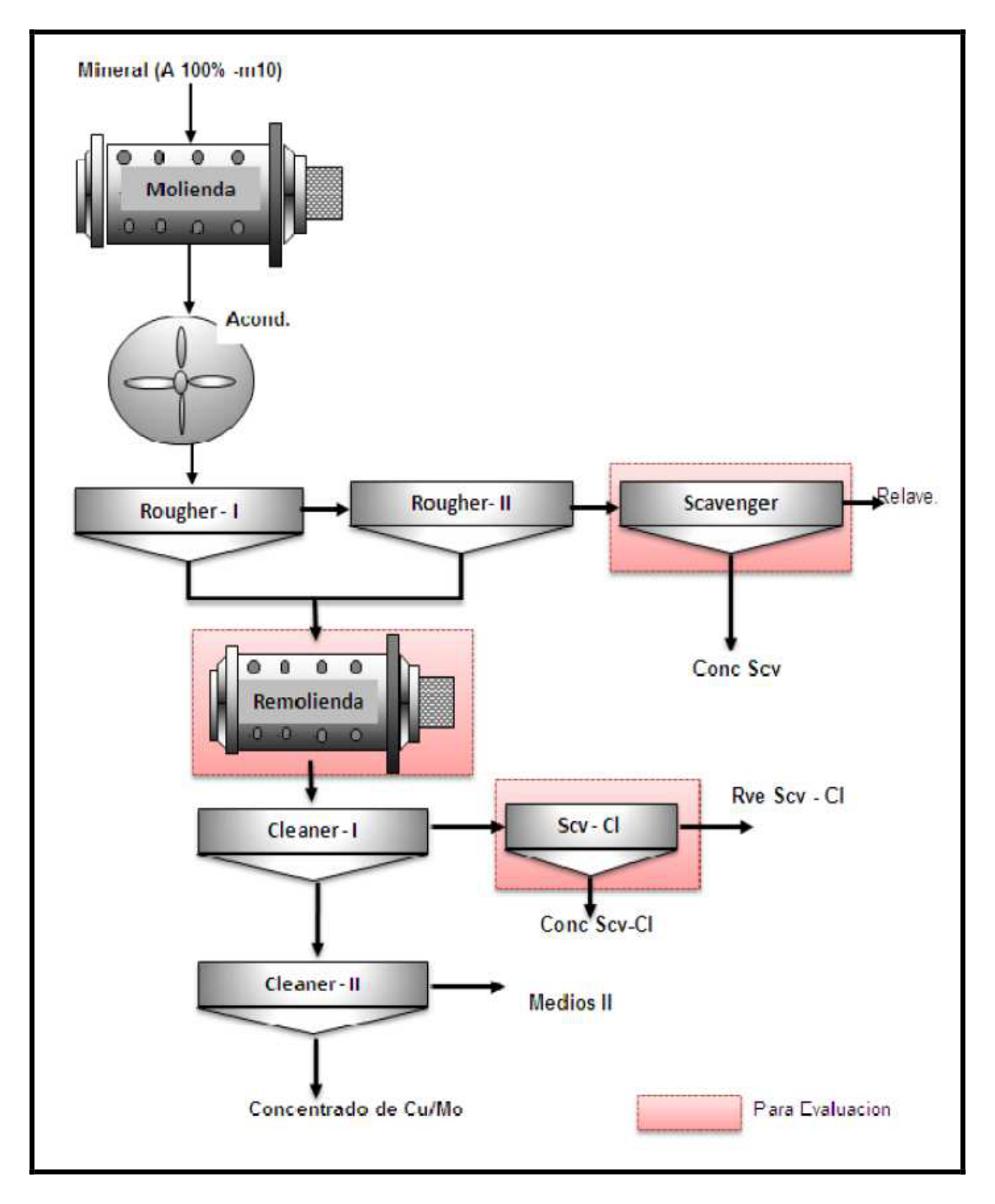
Panoro's earlier work on Antilla had pointed to a conventional mill and concentrator. Flotation tests by Certimin in 2013 gave 85.3% copper recovery from primary sulphide material and 79.4% from secondary sulphides. The secondary concentrate graded 36.3% copper against 20% for primary material. Molybdenum recoveries were 77.6% and 83.3%.
The 2018 study took a different route for the secondary sulphides alone. Aminpro Laboratories in Lima started column leach, bottle roll and mineralogical tests in March 2018 to assess conventional acid heap leaching and a simulated bioleach. Interim results showed copper extractions of about 75% in 150 days at a 3/8 inch crush and 175 days at 1 inch. The report suggests a phased development. A bioleach of secondary sulphides would come first, and a mill and concentrator for the primary sulphides later.
The resulting flowsheet is short. Run-of-mine ore is crushed, trucked to a lined valley and stacked in lifts. Acid solution irrigates each lift, and the pregnant leach solution (PLS) drains to a pond at the valley floor. SX transfers the copper to an electrolyte, and electrowinning plates it as grade-A cathode. Molybdenum is not recovered in this scenario and does not enter the economics.
Key Process Stages
Crushing
Trucks haul run-of-mine ore from the open pit to a multi-stage crushing plant that reduces it to about 100% minus 1 inch. The crushed ore is stockpiled. A front-end loader fills 20 t dump trucks, which carry it to the leach area. The report notes that trade-off studies are still needed to pick the best economic crush size.
Valley-fill heap leaching
The leach facility fills a valley and can take about 120 million tonnes of ore over the 17 year mine life. A synthetic liner seals the valley floor so that all percolating solution reports to the PLS pond. Ore goes down in 10 m lifts. Each lift is irrigated with dilute acid at 4.5 l/m2/h through a leach cycle of 200 days.
The sizing works out to about 2.35 million m3 of ore and 234,637 m2 of irrigated area per cycle, over 30 cycles. Across the life of mine, about 6.98 million m2 of surface is irrigated. The design solution flow is about 1,056 m3/h.
Solvent extraction
A conventional multi-stage SX plant treats the PLS, which averages 2.86 g/l copper in the design. At PEA level the plant handles about 650 m3/h of PLS. The design uses an organic to aqueous flow ratio of 1 and an extraction efficiency of 95%, leaving raffinate at 0.5 g/l copper. The raffinate is topped up with acid and make-up water and goes back to irrigate the heap.
Electrowinning and shipping
The loaded copper passes to the electrowinning plant and plates out as grade-A cathode. Cathodes are trucked to the port of Marcona for sale. The design averages about 60 t of copper a day.
Additional Interesting Data and Summary
Head grade starts at 0.54% Cu in Year 1 and 0.59% Cu in Year 2. It trends down to about 0.3% by Year 12, rises to 0.48% in Year 13 and then declines again. Cathode output sits near 30,000 t a year from Year 1 to Year 4, falls toward 15,000 t by Year 12, recovers to about 25,000 t in Year 13 and declines to 15,000 t by Year 16. In Year 17 the plan treats 1.9 million tonnes at 0.35% Cu for 4,700 t of cathode. Elsewhere the report says production falls to 5,000 t by Year 17, and Section 17 also gives total processed ore as 7.3 million tonnes, which does not match the 118.7 million tonne design figure.
Water comes from runoff in the Huancaspato River beside the operating area and from the Ticlia lagoons 7 km to the northwest. Power would come from the nearby Cotaruse-Las Bambas line through the Cotaruse substation.
The mine plan also holds inferred cover and cap material of 0.3 Mt at 0.28% Cu and 0.7 Mt at 0.26% Cu. Little testing has been done on these, and the report recommends including them in future work. The economics use a long-term copper price of US$3.05/lb, and the capital estimate carries PEA level accuracy of plus or minus 50%. Initial capital includes US$41.1 million for mine development and US$1.3 million for mine equipment, alongside the plant.
Key Processes
- Multi-stage crushing to 100% minus 1 inch
- Truck haulage of crushed ore to a valley-fill leach pad
- Lined valley floor with a pregnant solution pond
- Acid irrigation of 10 m lifts over a 200 day cycle
- Multi-stage solvent extraction of the PLS
- Raffinate recycle with acid and make-up water
- Electrowinning of grade-A copper cathode
Source: NI 43-101 Technical Report on the PEA for the Antilla Copper Project Heap Leach and SX/EW Operation, 11 June 2018.
Project website: Antilla Copper Project
