admin

Gabbs Project: Heap Leach, Milling and Flotation PEA

The Gabbs Project employs a dual-processing strategy to recover gold, silver, and copper from oxide and sulphide mineralization. The initial five years of mine life will focus on heap leaching of oxide material, transitioning to milling and flotation for sulphide resources starting in year six. Both circuits share common crushing, SART, and ADR infrastructure to optimize capital and operational efficiency.

Gabbs Project: Heap Leach, Milling and Flotation PEA Read Post »
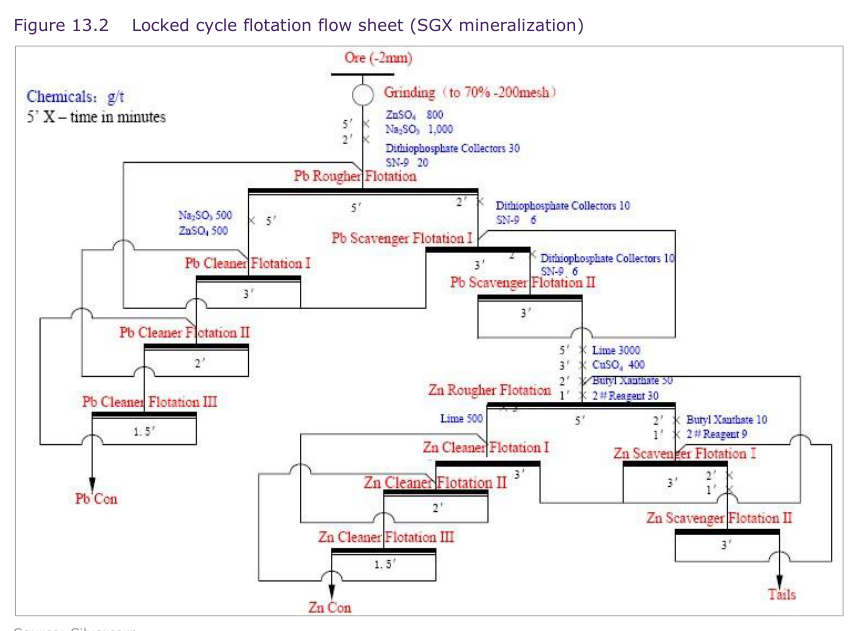
Figure 13.2 Locked cycle flotation flow sheet (SGX mineralization)

NI 43-101 Technical Report Update on the Ying Ag-Pb-Zn Property

This technical report details the processing operations and metallurgical performance at the Ying Property, operated by Silvercorp Metals Inc. in Henan Province, China. The property currently utilizes two processing plants, Plant 1 (Xiayu) and Plant 2 (Zhuangtou), with a combined design capacity of 2,800 tpd and actual throughput averaging 2,500 tpd. A third processing plant (Plant 3) is under construction with a design capacity of 3,000 tpd, scheduled to begin trial production in mid-2024, which will replace the existing facilities.

NI 43-101 Technical Report Update on the Ying Ag-Pb-Zn Property Read Post »

Reno Creek ISR Plan Uses Production Units of 80 to 100 Wells and a Carbonate Lixiviant With Ion Exchange

This 2016 NI 43-101 Technical Report by Behre Dolbear outlines the Reno Creek ISR Project for AUC. The project proposes In-Situ Recovery (ISR) for uranium extraction from fluvial and shoreline facies sandstone formations. The report details the technical feasibility based on pilot tests and bench-scale studies, highlighting a recovery rate of approximately 70% of in-place resources.

Reno Creek ISR Plan Uses Production Units of 80 to 100 Wells and a Carbonate Lixiviant With Ion Exchange Read Post »

Hemlo Mine — 2025 Technical Report

The Williams Mill at the Hemlo Mine utilizes a conventional processing flowsheet designed for sulphide ore, incorporating crushing, grinding, gravity concentration, and cyanide leaching. The plant currently processes underground ore following the closure of the Williams open pit in 2020. The facility includes a gravity circuit with Knelson concentrators and an intensive leach reactor, followed by a Carbon-in-Leach (CIP) circuit for gold recovery. Tailings management involves a paste plant for underground backfill and a flotation circuit for sulphide removal prior to deposition in the Tailings Management Facility (TMF).

Hemlo Mine — 2025 Technical Report Read Post »

Botija Abajo Project – Molejón Mine — 2012 Technical Report

This technical report outlines the metallurgical study and processing plant design for the Botija Abajo Project at the Molejón Mine. The study establishes favorable conditions for the extraction of copper and gold from representative ore grades. The proposed flow sheet includes primary, secondary, and tertiary crushing, ball mill grinding, rougher flotation, and concentrate thickening and filtration. The design throughput is set at 1,500 tpd with 90% availability, targeting a mine life of approximately 6 years.

Botija Abajo Project – Molejón Mine — 2012 Technical Report Read Post »

Goldboro Project — 2021 Technical Report

This Feasibility Study outlines the process design for the Goldboro Project, focusing on a conventional leach and carbon-in-pulp (CIP) process route selected for its suitability to the deposit and project economics. The proposed flowsheet utilizes standard gold recovery technologies, including a three-stage crushing circuit, ball mill grinding, and gravity concentration prior to intensive leaching. The plant is designed for a nominal throughput of 4,000 tonnes per day (1.46 Mtpa) with a target total gold recovery of 96% over the life of the mine.

Goldboro Project — 2021 Technical Report Read Post »

Debarwa Feasibility Study — 2012 Technical Report

The Debarwa Feasibility Study outlines the development of a greenfield mining project by Sunridge Gold Corp. The project is designed to treat 270,000 tons of ore per annum, utilizing three distinct processing flowsheets based on ore type. The mine will operate as an open pit facility, transitioning from copper production to gold and silver production over a multi-year schedule.

Debarwa Feasibility Study — 2012 Technical Report Read Post »

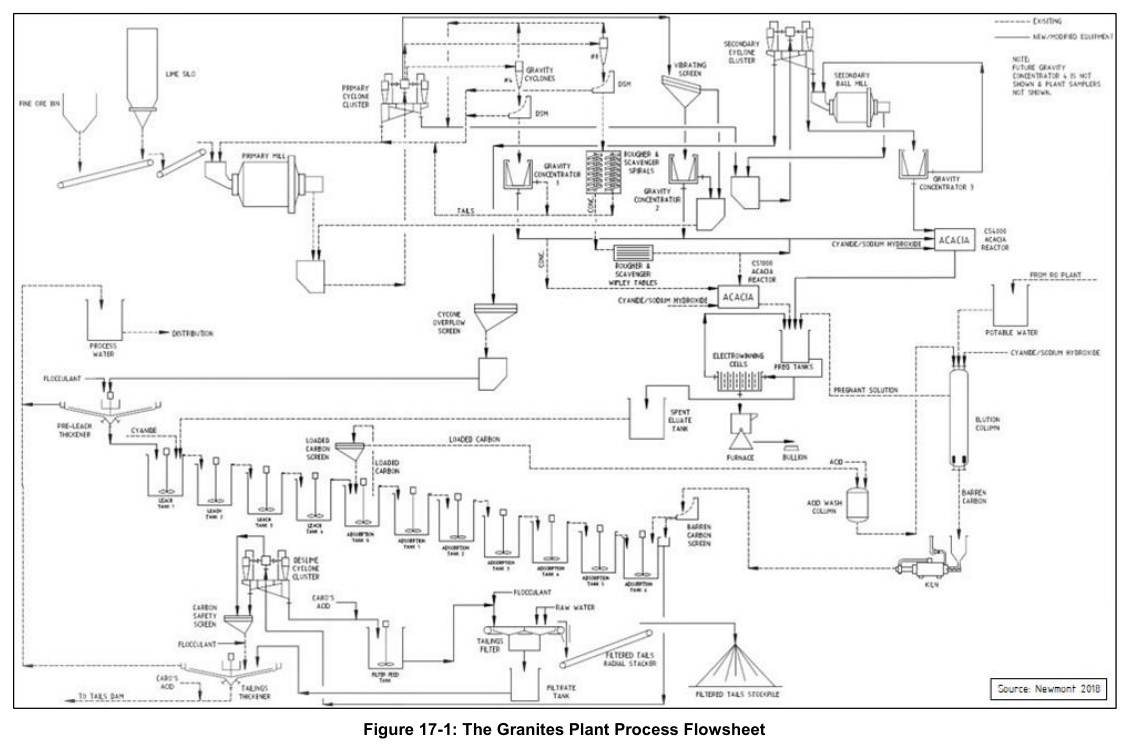
Figure 17-1: The Granites Plant Process Flowsheet

Tanami Operations — 2019 Technical Report

This section of the NI 43-101 Technical Report details the recovery methods and processing plant design for The Granites underground mine operated by Tanami Operations in the Northern Territory. The plant, originally constructed in 1986, has undergone significant upgrades including the TEP (Tanami Expansion Project) commissioned in Q3 2017. The current configuration features a 3-stage crushing circuit feeding a primary and secondary ball mill circuit, followed by gravity concentration and Carbon-in-Leach (CIP) recovery. The plant is currently operating at feed rates between 300 to 350 tph, with a design capacity of 333 tph and achieved rates up to 390 tph.

Tanami Operations — 2019 Technical Report Read Post »

Ekati 2016 Report: 10,800 dmt/d Kimberlite Plant With HPGR Re-Crush, Twin DMS Modules and X-Ray Recovery Adds a Fines DMS and Prepares for Jay Ore

This NI 43-101 Technical Report details the recovery methods and process plant operations for the Ekati Mine in the Northwest Territories, Canada. The process plant has a design capacity of 15,500 t/d, with a current budgeted throughput of 12,320 dmt per operating day. The facility utilizes a comprehensive flowsheet designed for kimberlite processing, involving primary, secondary, and tertiary crushing stages followed by heavy media separation and various sorting technologies.

Ekati 2016 Report: 10,800 dmt/d Kimberlite Plant With HPGR Re-Crush, Twin DMS Modules and X-Ray Recovery Adds a Fines DMS and Prepares for Jay Ore Read Post »

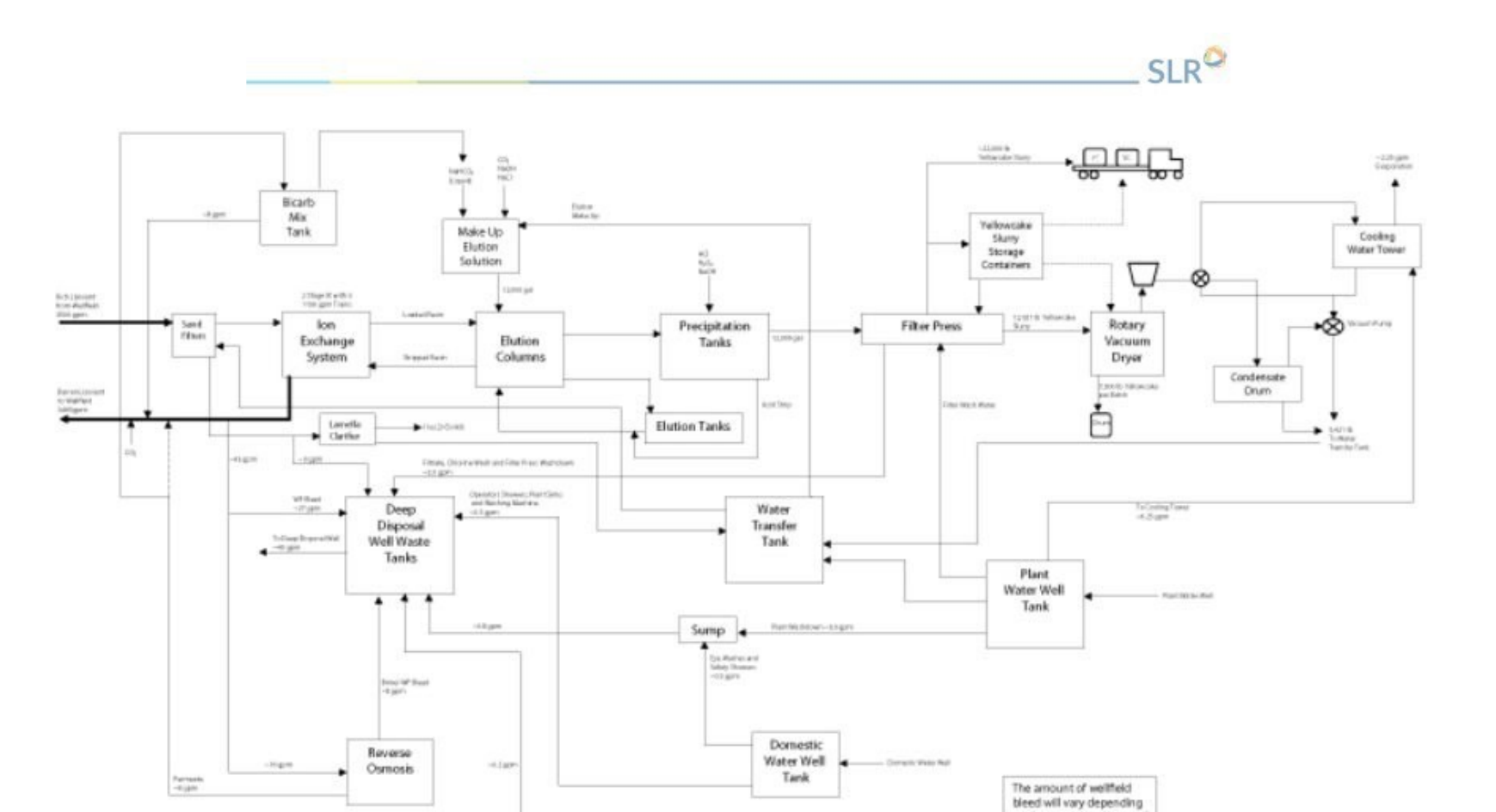
Nichols Ranch Unit process flowsheet: Nichols Ranch Plant Flow Sheet

Nichols Ranch Unit — Technical Report

This section of the technical report details the recovery methods and processing plant design for the Nichols Ranch Unit. The facility is licensed and designed to operate three major solution circuits: the recovery/extraction circuit, the elution circuit, and the yellowcake slurry production circuit. Currently, only the recovery/extraction circuit is constructed and operated on-site at the Nichols Ranch Unit processing facility. The plant utilizes an ion exchange system to extract uranium liberated underground from the circulating lixiviant flow.

Nichols Ranch Unit — Technical Report Read Post »

Scroll to Top