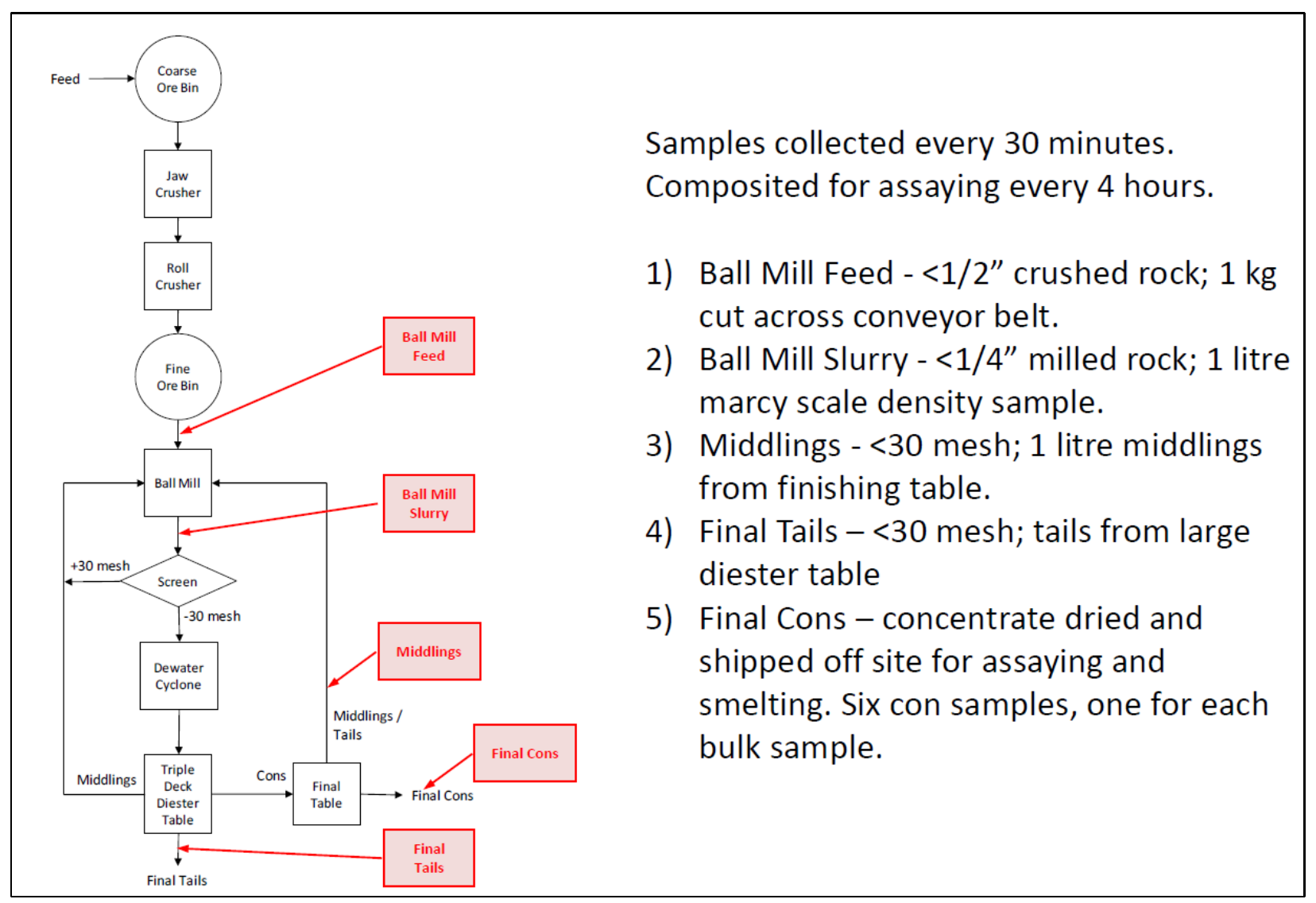
Mineral Processing Circuit

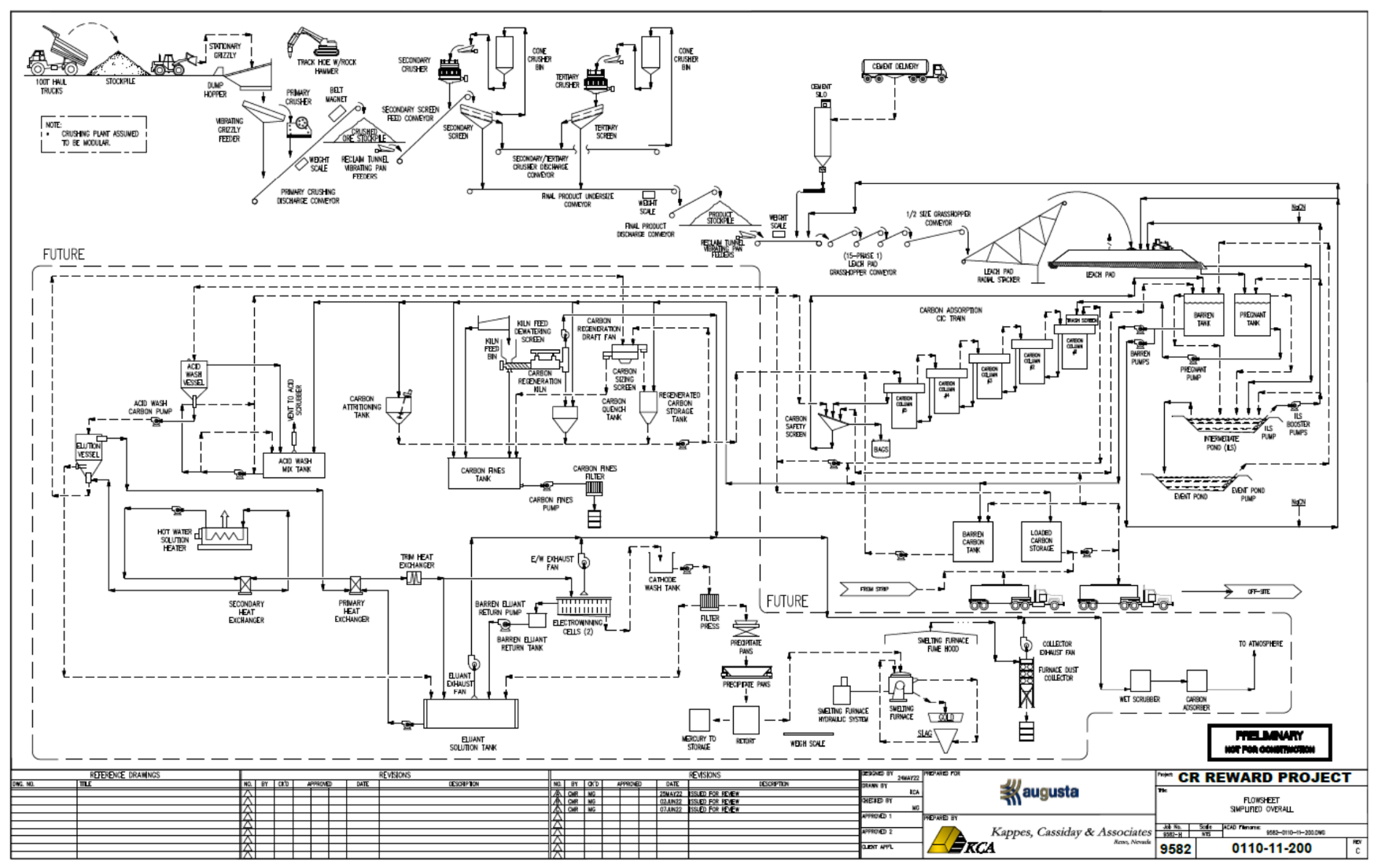
Reward Project process flowsheet: Simplified Process Flowsheet

Reward Feasibility Study Plans 5,479 t/d Three-Stage Crushing and Two-Stage Heap Leaching at 79% Gold Recovery

This technical report outlines the metallurgical assessment and processing methods evaluated for the Reward Project. Various schemes including cyanide slurry leaching, heap leaching following crushing, and heap leaching at run-of-mine (ROM) size distribution were tested. Cyanide slurry leaching was eliminated from consideration due to low ore grades that could not economically justify the capital and operating costs associated with a milling scenario.
Reward Feasibility Study Plans 5,479 t/d Three-Stage Crushing and Two-Stage Heap Leaching at 79% Gold Recovery Read Post »

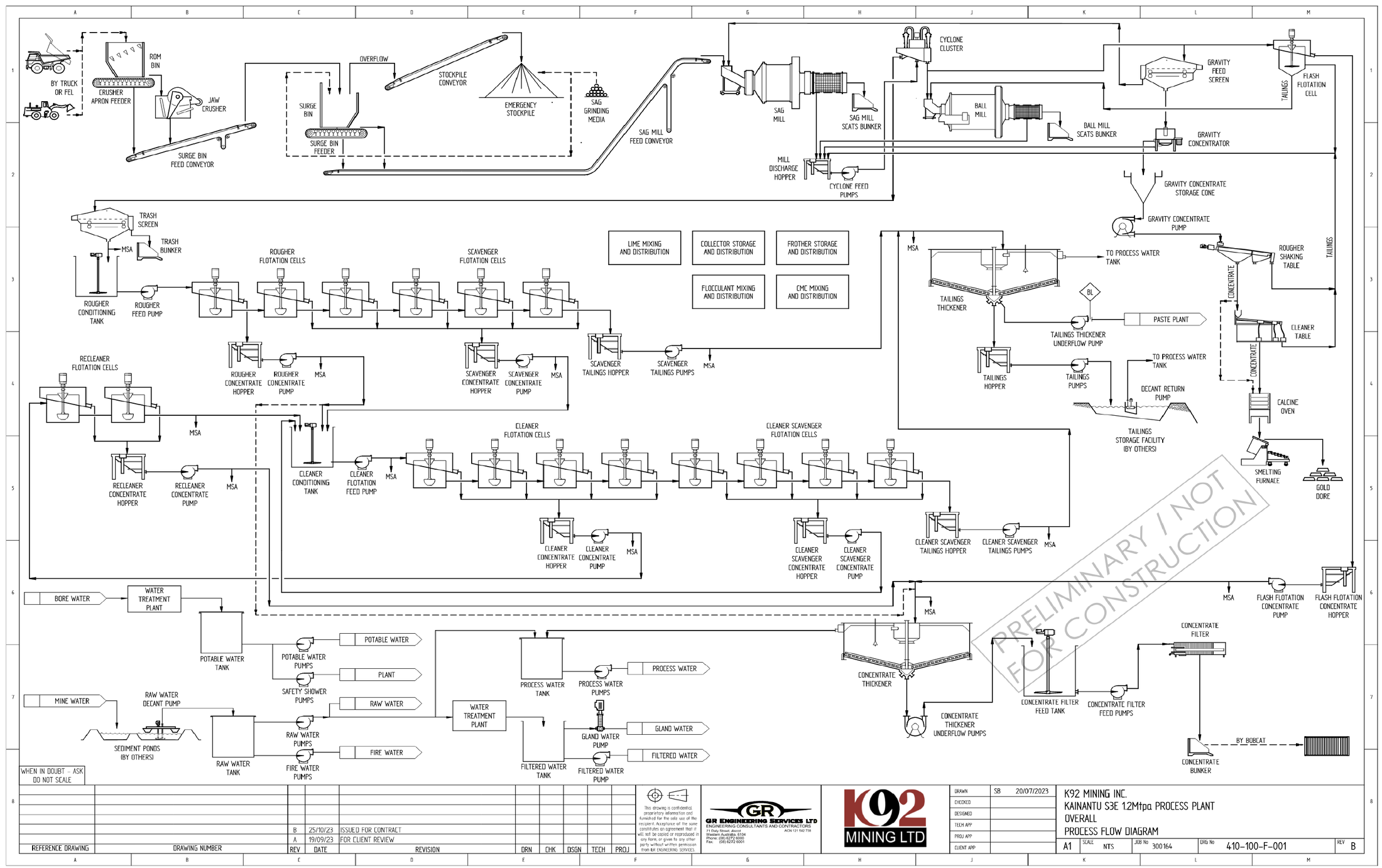
Kainantu Gold Mine process flowsheet: Overall Process Flow Diagram

Kainantu 2024 Updated IDP Designs a 1.2 Mtpa SAB Plant With Flash Flotation, Gravity Tabling and Conventional Flotation for a Gold-Copper Concentrate

This Independent Technical Report outlines the Integrated Development Plan for the Kainantu Gold Mine in Papua New Guinea. The project is currently in the Definitive Feasibility Study stage, focusing on the development of an underground mine with a processing plant designed for a throughput of 1.2 million tonnes per annum (Mtpa). The flowsheet is engineered for optimal metal recovery of gold and copper from sulphide ore, utilizing a robust combination of comminution, gravity concentration, and flotation circuits.

Kainantu 2024 Updated IDP Designs a 1.2 Mtpa SAB Plant With Flash Flotation, Gravity Tabling and Conventional Flotation for a Gold-Copper Concentrate Read Post »

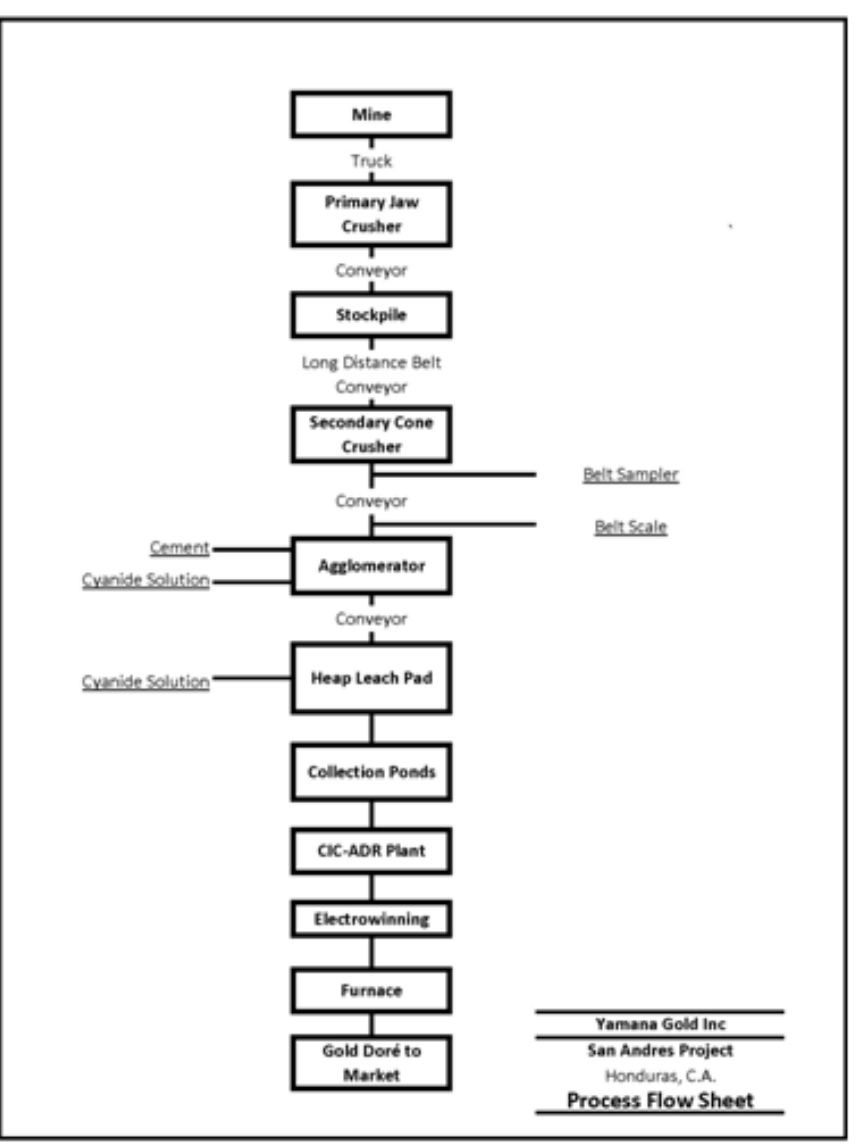
San Andrés Mine process flowsheet: Process Flow Sheet

San Andrés 2014 Report Expands the Two-Stage Crush, Agglomerate and Heap Leach Operation Toward 7 Mtpa With a Hydraulically Separate Phase V Pad

The San Andrés Mine is an operating open pit project utilizing conventional mining methods with 6 m high benches. The mine production schedule is based on mineral reserves designed to support operations from the initial topography of December 31, 2010 up to the final pit geometry. The project has a Life of Mine (LOM) of 9 years, with a total ROM production of 45.8 Mt expected to contain approximately 784,000 oz Au at an average grade of 0.53 g/t.

San Andrés 2014 Report Expands the Two-Stage Crush, Agglomerate and Heap Leach Operation Toward 7 Mtpa With a Hydraulically Separate Phase V Pad Read Post »

El Tigre Project — 2025 Pre-Feasibility Study

The El Tigre Project Pre-Feasibility Study outlines the design for a heap leach processing facility targeting gold and silver recovery. The plant is designed for a nominal throughput of 7,500 tpd for the initial three years, expanding to 15,000 tpd for the remaining life of mine. The process relies on a three-stage conventional crushing circuit followed by heap leaching on lined pads, with solution recovery via a Merrill Crowe zinc precipitation circuit.

El Tigre Project — 2025 Pre-Feasibility Study Read Post »

Candelones Oxide Project — 2022 Technical Report

The Candelones Oxide Project, developed by Unigold Inc., outlines a heap leach processing facility designed to treat 5.6 Mt of oxide mineralization over a 3-4 year mine life. The operation utilizes an open pit mining method with a daily throughput of 5,000 tonnes. The process involves screening ROM material to separate fines, which are agglomerated with cement and cyanide, before stacking on a heap leach pad. Gold and silver recovery is achieved through a Carbon-in-Columns (CIC) circuit followed by an Adsorption, Desorption, and Regeneration (ADR) plant, ultimately producing Doré bars via electrowinning and smelting.

Candelones Oxide Project — 2022 Technical Report Read Post »

Guanajuato Mine Complex — 2020 Technical Report

This section of the NI 43-101 Technical Report details the recovery methods employed at the Guanajuato Mine Complex (GMC) mineral processing plant. The facility processes ore from multiple mines within the complex, including the San Ignacio mine, blending materials since mid-2016. The plant operates with a throughput of approximately 779 tonnes per operating day, utilizing a five-stage process flow that includes crushing, milling, flotation, thickening, and filtering. The final product is a concentrate of iron sulphide (pyrite) containing high values of gold and silver, which is marketed and sold as the end product.

Guanajuato Mine Complex — 2020 Technical Report Read Post »

Relief Canyon Gold Project — 2018 Technical Report

This 2018 Technical Report and Feasibility Study outlines the development plan for the Relief Canyon Gold Project in Nevada, U.S.A., operated by Pershing Gold Corporation. The project involves the expansion of existing open-pit mining operations to access gold and silver mineralization in the Main Zone, Jasperoid Zone, and Lower Zone. The mine is designed with an estimated life of 5.6 years, processing up to 16,700 tons of ore daily for a total annual throughput of 6.0 million tons.

Relief Canyon Gold Project — 2018 Technical Report Read Post »

Mangazeisky Silver Project — 2024 Technical Report

The Mangazeisky Silver Project Feasibility Study Update outlines a comprehensive recovery method designed to maximize silver recovery while minimizing power requirements. The process flowsheet integrates a standard crushing and milling circuit with gravity concentration and agitated tank leaching. The gravity concentrates undergo intensive cyanidation, while the gravity tails are leached in agitated tanks. The resulting silver-bearing solutions are processed via direct electrowinning to recover silver metal, a decision made to avoid the complexity and cost of the Merrill Crowe process given the exceptionally high silver grades.

Mangazeisky Silver Project — 2024 Technical Report Read Post »

Scroll to Top